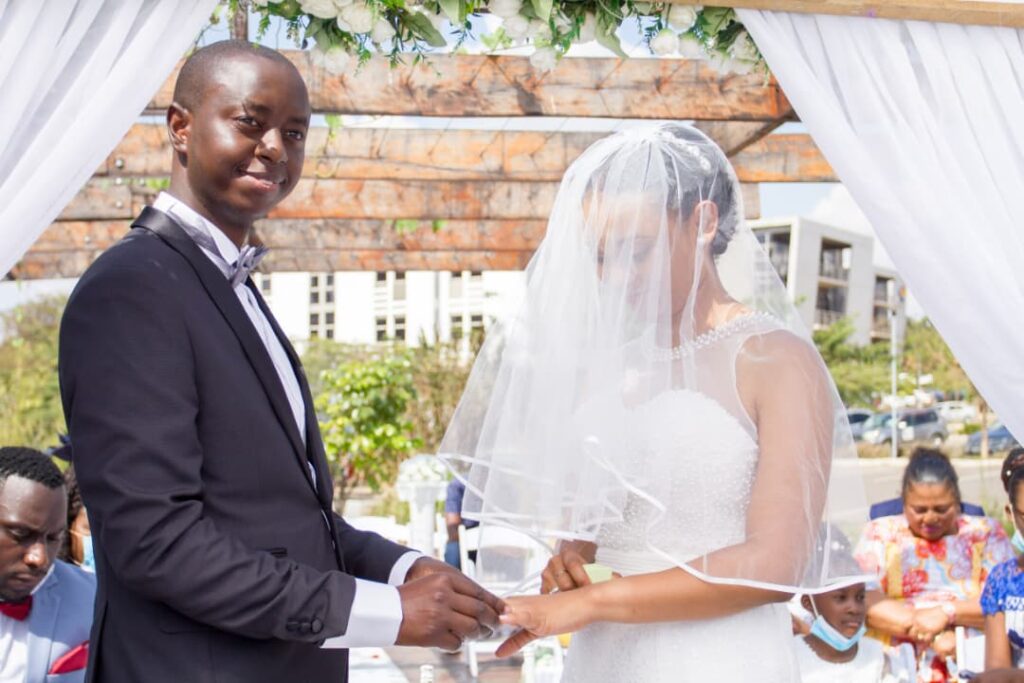
The last time I sat down to write about marriage was on our second anniversary. That was four years and several seasons ago. Enough has happened since to warrant another look.
Not a love letter. Not a manual. Just honest notes from six years in.
The drift is quiet
The thing nobody told me before marriage is that the danger does not always announce itself loudly.
The honeymoon ends. The baby arrives. Work demands more. Responsibilities pile up. And the marriage, without anyone deciding it should, starts running on autopilot. Not in crisis. Not badly. Just quietly, incrementally, becoming less tended. Good intentions everywhere. Actual investment happening less and less.
A marriage in genuine crisis is obvious. You feel it, you name it, you are forced to respond. But a marriage that is merely drifting does not feel like an emergency. It feels like a Tuesday. Nobody is shouting. Nobody is leaving. Everything is technically fine. And because it is technically fine, nobody intervenes. The problem is never quite bad enough to fix. You keep meaning to do something about it. The weeks pass. You keep meaning to.
This is the pattern that quietly did more damage in our marriage than any argument ever did. When things were genuinely bad, the badness forced a response. But when things were just slowly becoming less than they were, there was no alarm. No moment of reckoning. Just two people becoming increasingly comfortable with less than they originally chose each other for, and neither of us quite noticing when it became the new normal.
I have seen this pattern in my own life long enough to recognise it. It is what ended my relationship before this one. It is what nearly ended this one too. And it is what took this very blog offline for three years while I was busy doing other things. Journalling is what eventually showed me the pattern. Not dramatically. Just clearly, on a page, in dates and gaps that could not be argued with.
A garden does not become overgrown because someone decided to neglect it. It becomes overgrown because nobody decided to tend it. The difference sounds small. It is not.
A business losing money dramatically gets everyone’s attention. Meetings are called, decisions are made, things change. But a business that is just slowly becoming less profitable, less energised, less focused drifts for years before anyone calls it what it is. Our marriage was no different. The dramatic moments got attention. The quiet erosion did not.
You know the drift has set in if you and your partner are technically always together but cannot remember the last time you did something that was just for the two of you. If the last real conversation that was not about logistics, money, the child, or work was several weeks ago. If the last time you took photos together was at someone else’s event. None of these things felt like crises in the moment. That is exactly the point. They accumulated quietly until the distance between us had grown so familiar that I nearly stopped noticing it was distance at all.
What fought the drift for us was not a grand gesture. Grand gestures are for weddings. What fought the drift was ritual. Small, repeatable, easy to sustain.
We watch Mpali together on weekday evenings at 20:30. It sounds like a small thing. It is a small thing. But it is also a non-negotiable window in the day that belongs only to us, not to work, not to the child, not to anyone else’s schedule. Our anniversary every year means time away together, just the two of us, regardless of how the finances look that month. We walk and stretch together most mornings, sometimes not talking much, but moving side by side before the day takes over. We have also started running marathons together. Zambia has caught the marathon bug and there is barely a month that goes by without one. We have found something in that shared discomfort of training and showing up on race day that no dinner date quite replicates.

We print photos, not for display, but for ourselves. Physical albums that require new pages every few months, which means the moments have to be captured. It keeps you looking for them. You can scroll past a digital file. You cannot scroll past an album on the shelf.
None of these things are expensive. None of them require a special occasion. Together they are the structure that has held our marriage above the waterline when life was trying to pull it under.
When I read what the couples who have been at this for thirty or forty years consistently say at weddings, it is not a secret formula. It is the same thing, said differently each time: keep investing in the marriage deliberately. They are not saying it as advice. They are saying it as people who watched, up close, what happens when you stop.
You did not read the terms and conditions
When we sign up for something, an app, a subscription, a new service, there is always a terms and conditions page. Almost nobody reads it. We scroll to the bottom, tick the box, and proceed directly to the part we came for. The benefits. The features. The thing we wanted.
Then, a few weeks in, we discover the limitations. The token limits. The renewal fees. The things that were always there in the fine print that we chose not to read because we were focused on what we were getting.
Marriage has terms and conditions too. I did not read all of mine.
Not the vows. The vows are the headline offer. I mean the actual operating terms that come with the specific person you are marrying. The things that were visible before you married but that you either decided were manageable, hoped would change, or simply scrolled past in your focus on everything that was working.
She mentioned she did not enjoy cooking. More than once. I noted it and moved on. He is a saver and she is a spender and they both knew this going in. She was a certain size when they met and somehow this becomes a point of tension in a marriage where both people knew who they were marrying. He takes days to respond to messages, even from her, and this was true during the courtship too. These are not surprises. They were in the fine print. The question is what you do when you can no longer scroll past them.
Because the longer you are in a marriage, the more the terms and conditions reveal themselves in full. And when they do, you face a choice every married person eventually faces. Do you keep going back to renegotiate terms the other person never agreed to change, or do you accept what you actually signed up for and build from there?
I have been watching couples at weddings and listening carefully to the ones who have lasted long enough to notice that the ones who seem to have figured something out are not people who found partners without terms and conditions. They are people who read them honestly and directed their energy toward building rather than correcting. There is a significant difference between a partner who genuinely needs to change and a partner who simply operates differently from you. Working out which is which, and being honest about it, is one of the harder things marriage quietly asks of you.
The things that are not said
Everyone says communication is the key to marriage. I have heard it at every wedding I have attended and I believe it. What I have found, though, is that it is not the things said that do the most damage. It is the things left unsaid.
The grievance that never got named. The disappointment swallowed to keep the peace. The thing one of you has been hoping the other would notice without being told. The conversation about money, or about feeling unseen, or about a pattern that has been quietly building for months, the one that keeps getting postponed because the timing is never quite right and it feels easier to let it go.
It does not go. It settles. It layers. It becomes part of the atmosphere of the marriage without either of you formally deciding it should.
In Zambian households, there is often an additional layer. The expectation that the man of the house does not show vulnerability or raise complaints, that he manages things silently. Or the expectation that a wife who raises a concern about feeling overlooked is being difficult, not content, not grateful enough. So both partners learn to swallow things that should be said. And the unsaid things accumulate quietly over years.
What struck me, having watched it happen to people I know, is that when marriages eventually reach breaking point, the things said loudest at that stage are almost never new. The accusations made when outside help is finally called in, the grievances aired in a lawyer’s office, the things that end up as headlines in the Daily Mail with the other partner looking genuinely shocked, those things were quietly there for years. They were never named. Never resolved. Now suddenly being said at full volume in front of people who were never meant to hear them. The marriage did not collapse because of those words. It collapsed because of the years of silence that preceded them.
In our own marriage, there were seasons when we were present with each other without really being present. Talking, yes. Functional, yes. But one of us holding something that had not been raised, and the other sensing it without knowing exactly what it was.
The way through was never dramatic. One of us would notice the tension and simply name it. Not accusingly. Just: something feels off between us. I can feel it. Can you feel it too?
Most of the time, if your partner is honest, they will say yes. And then you can talk about it. Not to win. Not to be right. Just to find the thing and address it before it settles into another layer of silence.
The plan on the bedroom wall
In the first year of our marriage, we sat down and wrote a ten-year plan.
We called it Vision 2030. We asked ourselves what we wanted this marriage and this life to look like by 2030, not based on where we were at that moment, but on where we genuinely wanted to go. Finances and savings targets. Careers and what we each wanted to build professionally. Children, how we wanted to raise them, what kind of environment we wanted around them. Lifestyle in the deliberate sense, not the aspirational one: where we would live, how we would balance what we needed against what we were tempted to spend on. We wrote it all down, framed it, and put it on the bedroom wall.
The plan itself was not perfectly realistic. Some of what we wrote was ambitious in the way that early marriage tends to produce. But the plan was never really the point. The point was what writing it together did to us.
It shifted the conversation from his money and her money to our money. It moved our frame from this month to this decade. It quietly resolved questions that many couples argue about for years because we had already answered them together before the pressure of the decision arrived.
This last part matters more than it sounds. It is easy to overspend on children’s school fees or rent the most impressive flat available when there is no plan. Those choices feel reasonable in isolation. Against a ten-year plan, you start to see them for what they are: consuming your financial future one comfortable decision at a time. The plan does not tell you what to sacrifice. It just makes it harder to pretend that every spending decision is neutral.
When we saw other couples doing things that looked impressive, the plan anchored us. It is very difficult to feel behind when you know what you are actually building.
A business without a long-term plan makes reactive decisions. It spends what comes in because there is no picture of what the money is supposed to be building toward. A marriage without a shared vision operates the same way, except the cost accumulates in years rather than in quarterly statements.
A shared vision does not just hold a marriage together when things are hard. It changes the texture of the ordinary days. You stop making decisions as two individuals who happen to live together and start making them as people building something specific. That alignment shows up on an ordinary evening when you are tired and there is nothing dramatic happening, and you look across the room at the person you married and there is a quiet sense, not of arrival, but of direction. Of moving somewhere together, on purpose. That feeling is not accidental. It is what a shared vision produces, slowly, over years.
If you have not written yours, that is where I would start.
Whose marriage is this?
This is the one that took me longest to work out. And I think many men reading this will recognise some version of it.
Before we got married, I was carrying a template I had not consciously chosen. Assembled over years from what I had watched growing up, from what was considered normal in the spaces I moved in, from things said directly and things absorbed without anyone saying them out loud. The template looked something like this: the man provides everything, the man’s salary belongs to the family, the woman’s salary is her own business, the man does not cook, the man does not discuss finances openly because that signals weakness, the man makes the major decisions.
Some of these things are stated in Zambian and African homes. Others are simply understood. Nobody tells a young man about to get married that he must never let his wife know how much he earns, but somehow many young men carry that understanding into their marriages anyway.
And then you get married to a real person with her own background, her own assumptions, her own strengths, and none of the template fits the way it was supposed to.
My wife is good with budgets. She has a discipline with money that produces actual results. So the monthly budget is hers. Not because the culture assigned it to her, but because she does it better than I do and it serves us. On a Tuesday evening when one of us gets home late and the other one arrived earlier, the question in our house is not whose role it is to cook. The question is what needs doing. The moment I stopped thinking about what a husband is supposed to do and started thinking about what this marriage actually needs, a specific kind of low-level friction went away.
Most of the pressure I have seen couples carry comes from looking outward for their blueprint. To relatives. To friends. Sometimes to parents who mean well but whose marriage is not this marriage. And increasingly, to social media, to the couples whose highlight reels look like a standard to meet, whose anniversaries are announced, whose lives appear to have been assembled without the friction that every real marriage contains. The problem with any external blueprint is that it is built around someone else’s strengths, someone else’s history, someone else’s private arrangements that you are not seeing. What looks like a template is almost always a performance. Your marriage has to be built from the inside, from your combined strengths and your honest weaknesses, or it will always feel like it is falling short of something that was never real to begin with.
The hard seasons
At our own wedding, our guest of honour said something I have never forgotten. She described marriage as a fire. Both partners are meant to keep putting wood in. The fire stays warm. The fire is the marriage. But there will be seasons, she said, when one of you simply cannot carry the wood. When life has taken too much. When the weight is too heavy. And in those seasons the other one has to carry enough for both.
Every marriage has a winter. The shape differs. What I found when ours came was that the things which held were not the plans or the systems. They were the habits built before the winter arrived. The daily check-in that had become non-negotiable. The anniversary trip we had never skipped. The commitment to never letting things fester too long between us before one of us named it. Small things. But they were already there when we needed them.
You do not survive difficult seasons by being strong. You survive them by deciding that the fire is worth keeping.
The centre holds
Six years in, and the thing I keep coming back to is simpler than everything above.
Marriage is worth the genuine effort. Not perfect effort. Genuine effort. There is a difference. It is worth it on the days you feel like investing and on the days you do not. It is worth naming the elephant in the room even when the naming is uncomfortable. It is worth accepting the terms and conditions you scrolled past and deciding to honour them anyway. Not because anyone is watching. Because this is where most of your life actually happens, and what happens here does not stay here. It moves into your work, into the energy you bring to everything you are trying to build, into the quieter parts of who you are.
I have come to think of marriage as one of the few glass balls we carry. Most of what we juggle daily are rubber balls. A missed deadline. A delayed project. A skipped gym session. They hit the floor and bounce back. Even things that feel significant in the moment, a difficult quarter at work, a stalled business deal, a falling out with a friend, tend to recover with time and effort. But marriage is glass. When you drop it, it does not bounce. It does not wait patiently on the floor for you to pick it up when you are ready. The pieces scatter, and some of them you never fully find again. This is why the work of marriage is less about dramatic recovery and more about keeping the grip in the first place.
There is a reason I spent years trying to get back to this. A reason I eventually stopped keeping my options open and chose. Those reasons did not expire when the wedding ended. They are what I return to when the work gets heavy. Do not let pride quietly dismantle something that was worth wanting in the first place. Get back to why you wanted it. Most of the time, it is still there.
Through all of it, the thing that has held for us is not a system. It is the commitment to something larger than both of us. Praying together. Reading together. The sense that this marriage is not just ours to manage but ours to honour.
Six years in, that is what I am most grateful for.
Four years ago I wrote five lessons. Today I have six. The arithmetic is not complicated. The marriage keeps teaching. The only requirement is that you stay in class.
What is one thing you have been meaning to tend to in your marriage that keeps getting postponed because everything else feels more urgent?
Happy anniversary, my love.