Nobody sits down one day and decides to start journalling because they think it would be a good habit.
Something happens first.
The notebook
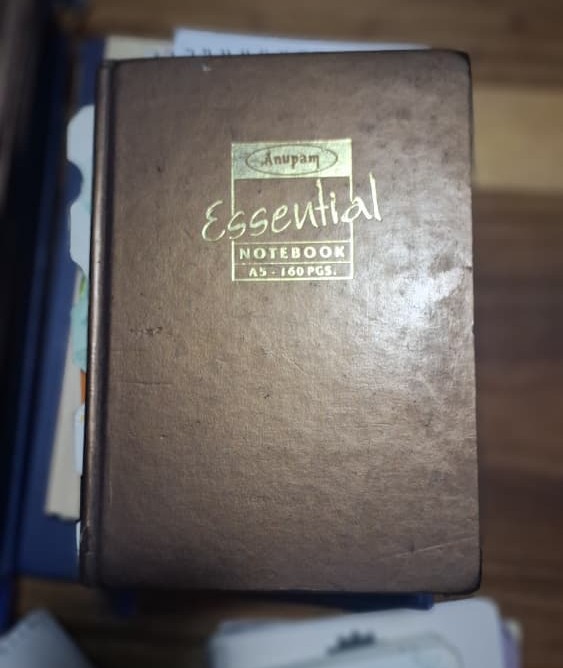
In 2009, my mother bought me a notebook for my Lafarge industrial attachment.
Not a journal. A working tool. You write down what the supervisor explains, you sketch the system, you take notes in the safety induction. When the attachment ends, the notebook has served its purpose.
But she did not buy me just any notebook.
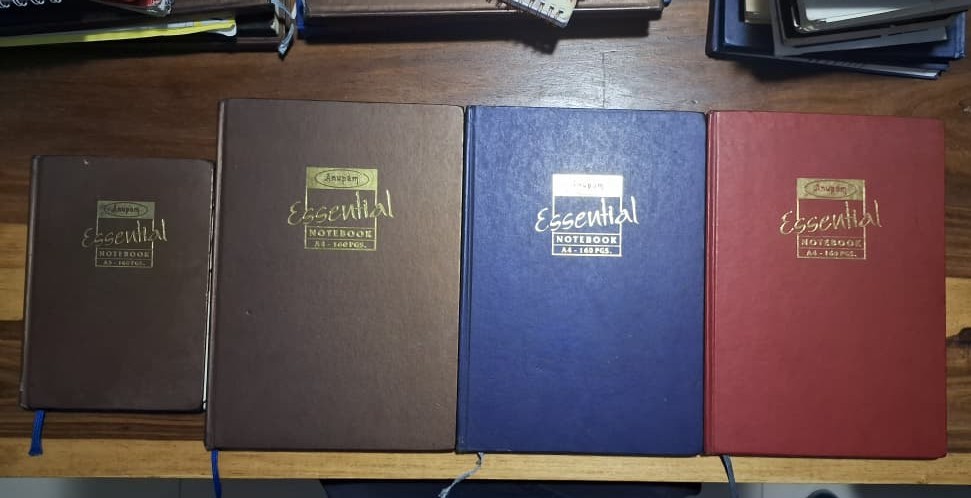
This one had a dark cover that felt like leather, a gold label on the front, and a fabric string marker stitched into the spine. I had grown up buying Sobi hardcovers and notepads from the corner shop. I had never owned a book like this. It felt like it had been made for something that mattered.
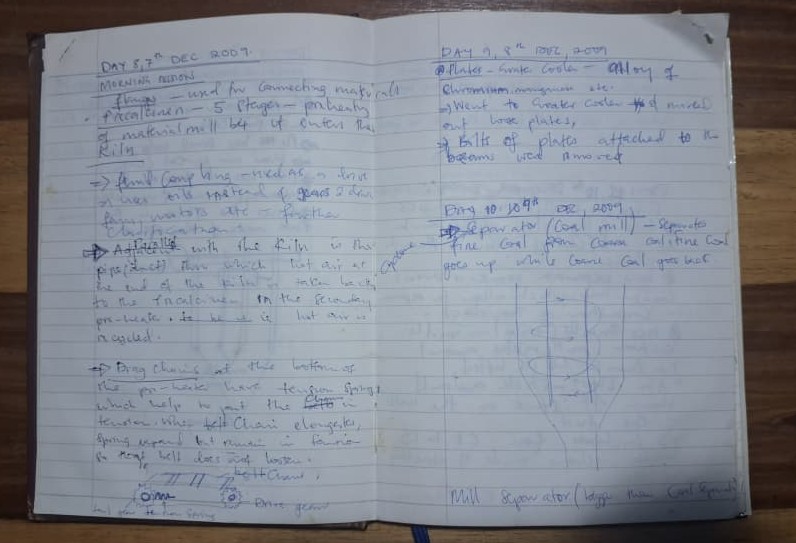
I carried it through the plant. I took notes in every department; control room, planners, operators. I sketched pump systems in it, labelled pressure lines, sat in meetings and wrote down what people who actually knew things said.
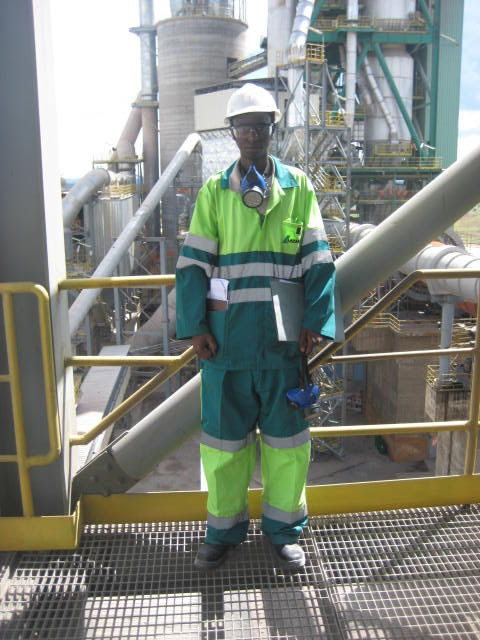
I climbed the cyclone towers in safety boots, which is not elegant, and stood at the top looking out over Lusaka from a height that made the city look more organised than it feels from inside it.
The highlight was the kiln.
Every cement plant runs on its kiln. A massive rotating cylinder that burns limestone until it becomes the material that becomes cement. If it goes down, the entire plant stops. I spent time at the kiln and understood for the first time why engineers talk about certain equipment the way a surgeon talks about the heart; with absolute, quiet reverence. Not dramatic. Just: this is the thing. Everything else serves it.
The attachment ended. The engineering notes stopped.
The notebook had some pages left over.
What 2010 brought
I went back to UNZA for third year. And then 2010 arrived with more than I was equipped to carry at once.
My first serious relationship, the one I had been in since my society days in Chilanga, came apart. I had buried myself in school and had not noticed what that was costing on the other side. By the time I looked up from the books, things had changed in a way that could not easily be undone.
She met someone else. She asked me to let her go.
I thought I was handling it.
Then one morning during vacation at home in Chilanga, I was scrolling through Facebook and came across her post. She was with him. He had tattooed her name on his body. She looked happy in a way that made everything final.
Something in my chest went very still.
I put on Encore by Jay Z and Linkin Park. Then Make it Rain by Fat Joe and Lil Wayne. As loud as the speakers would go. After a few minutes I turned the music off and sat in the silence of the room.
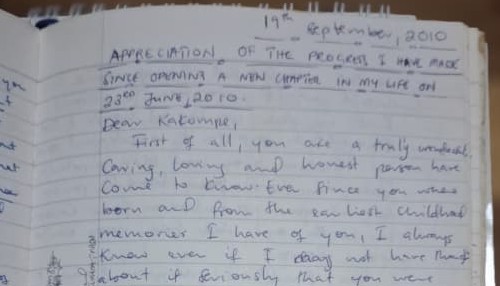
Then I picked up the Lafarge notebook and started writing.
The old man on the laptop
Around that same period, a new roommate arrived at the Vet hostels.
One evening I came back and found him at his laptop with something playing from it. An old man’s voice, steady and unhurried. His delivery had a quality that was hard to place at first, not a preacher’s rhythm, not the breathless energy of someone selling you something. More like a man who had figured several things out and was in no rush to perform the figuring. He had a way of making you laugh and then realise, a beat later, that he had been making a serious point the whole time.
His name was Jim Rohn.
He was talking about the habit of keeping a journal. He said something that stayed with me; that he made it a practice to buy empty books specifically so he could fill them with his own thoughts and ideas. Not because anyone asked him to. Just because he believed that what you chose to put down on paper said something about how seriously you were taking your own life.
I looked at the Anupam notebook in my hands. The one from Lafarge. The one with the pages left over that I had just started writing things in that had nothing to do with cement.
Something shifted.
What it actually did
It did not solve anything immediately.
But it did something more useful than solving. It slowed the noise down enough that I could see the thing clearly instead of just feeling it.
When I wrote down what was happening with the relationship and what I was feeling, I started to see the pattern underneath it. Not just that things had fallen apart, but why. I had been doing this for years without naming it: pouring everything into one area at a time and being surprised each time when the neglected parts suffered. School had consumed me. Then the relationship. Then school again. Each time, other parts of my life were quietly going without attention and I was not looking.
Writing it out made it visible. And what was visible could be worked on.
Years later, when I was frustrated enough about the BMW to write in a journal that the car was chewing my money, I was doing the same thing. Not dramatic reflection. Just honest accounting. Writing the frustration down on a page made it impossible to ignore. The car article I eventually wrote about that season, the one called I Downgraded I Downgraded My Car, traces back to that entry. The journal did not make the decision for me. But it made the situation too clear to keep avoiding.
That is what writing things down actually does. Not therapy. Not revelation. Just clarity, which turns out to be the more useful thing most of the time.
In 2010 I sat with the notebook and wrote out what I understood: that life was running on several dimensions at once, the spiritual, the social, the professional, and that paying attention to only one while neglecting the others had consequences you did not always see until they were sitting right in front of you. I wrote it as a framework. Three dimensions. 3D.
It became the name of the blog eleven years later. But in that room at the Vet, it was just a way of making sense of a very confusing season.
The shop on Cairo Road
When the Lafarge notebook filled up I asked my mother where she had bought it.
Penmarks. Cairo Road, next to the Indo Zambia Bank north end branch.
I went in and found the Anupam books on the shelf. Then I looked at the price.
For an empty book it was not cheap. I stood there for a moment thinking about whether an empty book was worth that. Then I remembered what Jim Rohn had said about filling the pages with something of your own. About taking your own thoughts seriously enough to put them somewhere permanent. If the book costs you something, you are more likely to put something valuable in it just to justify the price.
I bought it.
That was volume two.
There have been others since. One that became the founding document of a company I co-founded, and which I still open sometimes to remind my colleagues and myself why we started. Others for different seasons. Each one started because the previous one filled up and there was still more to figure out.
They all trace back to a notebook that came home from a cement plant with some pages left over.
How it started, honestly
I did not go looking for a journalling habit.
I was a twenty one year old engineering student whose relationship had ended and whose mother had bought him a nice notebook. A roommate happened to be playing something on his laptop at exactly the right moment. Jim Rohn happened to say the right thing. The notebook happened to have space.
Nobody plans these moments. They find you at the point where you need them.
And you either pick up the pen or you do not.