Most of what I am most grateful for, I did not want at the time.
Not philosophically. Specifically.
The bridge washed out. That is how it started.
At Ellensmere boarding school in Mukonchi, before the Grade 7 final exams, we filled in the forms for where we wanted to go for Grade 8. There was only one name I was writing down. St Paul’s Secondary School, also in Central Province. My uncle Misheck, who is no longer with us, had studied there before going on to UNZA. He was the most educated person in our family at the time and had come back as someone the world looked at differently. I was not following a path I had carefully reasoned. I was following footsteps that felt like the only logical direction.
The results came out. I had made it to St Paul’s.
My mother started buying the groceries. The trunk was being prepared. Everything was in motion.
Then the news arrived. Heavy rains in Central Province in early 2001. The road leading to St Paul’s had collapsed. The school was inaccessible. Term one had started and there was no way through.
I remember the feeling. All that preparation. The selections form. The results. The groceries already bought. Gone before I had even packed the trunk.
My mother found me an alternative at Kabulonga Boys in Lusaka. I remember the first day she took me there. The headmaster Mr Ziwa pulled me into his office and asked whether I smoked or drank before physically checking me for piercings and tattoos. Not literally. He checked. I was then placed in class 8F. Walking through that door all I knew was that this was not where I had been going.
The group that changed everything
Grade 8 was average. Movies, video games, counting the periods until the bell.
Then I started paying attention to a different group.
What they were doing with their evenings, their midnight hours, and a loaf of bread from Melisa after school is a story I have told in full. What I want to say here is simply this. Without anyone asking me to, I moved closer to them. And the person who walked out of Kabulonga Boys in 2002 was not the person who had walked in.
By Grade 9 I was the best student in the school in Civics and History. The class gave me a name. Silent banner.
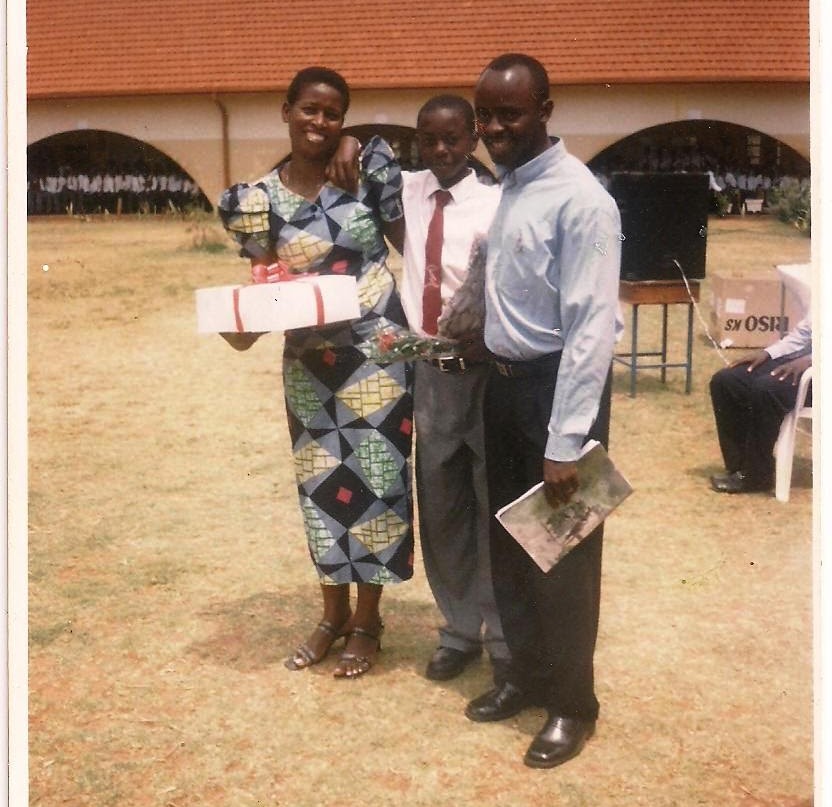
At the prize-giving, organised by Mr Ziwa with the full ceremony of tent, chairs and gifts, I walked up and received two prizes. My mother had come with a cake and flowers and made the kind of noise in that compound that a Zambian mother makes when she has been waiting for this particular moment. I felt shy. And also like the most loved person on earth.
Grade 9 total: 517 points. Strong enough to move on. The destination in our group was clear. Hillcrest or DK. Those were the only two worth naming.
The name that was not on the list
The results were posted on the tuckshop window.
I went to look.
My name was not there.
Standing there staring at that list, I did what any reasonable person would do after months of breaking the night, double trousers in the cold and Melisa bread for lunch. I panicked.
Actually, no. That is not what happened.
I did not panic. Because I knew exactly what I had written in those exams. My name not being on that list was simply a mistake. That was the level of confidence I had in myself at that moment. My thoughts were almost that my name was not there because I was the best.
Around me, the day was unfolding in both directions.
One classmate who had a hearing impairment and always sat in the front row came out of the office, stopped, looked at his results, and screamed. He said he could not believe it. Said he had to go show his mother. And then he ran. Literally ran to the bus stop. He is no longer with us. What he taught me that day I have never forgotten.
On the other side of that window, someone else was scanning the list. Scanning it again. Then walked around to check behind the tuckshop wall in case the paper had wrapped around the back. Those who had made it were already laughing. Someone shouted that his name had been there earlier but must have fallen off. The crowd found this very funny. The person checking behind the wall did not.
I went to the office. Five subjects, all excellent. No English. The paper showed I had been absent for the English exam. I had sat that exam. I knew exactly what I had written.
What followed was weeks of buses to the DEBS offices at Longacres with my mother. Slow progress. Repeated visits. The officer at one point suggesting I simply return to Kabulonga Boys rather than keep waiting for my English results to be found. Schools had reopened. Grade 10s were already in class. I had reported late to Grade 8. Now it was looking like I would report late to Grade 10 as well.
We kept going back.
When the English result finally arrived, it came in at 71%, not what I had expected, but it pushed my total to 517 points. Mulwanda had 534, Mwansa 528, Sam 524. I was fourth in the intake. The DEBS officer, who by now had become something of an acquaintance through sheer repetition, gave us a letter requesting a place.
Hillcrest was where I had wanted to go. But a month had already passed. The time lost made it complicated. DK was in Lusaka. It was easier option.
I took it.
I arrived late. I was placed in class 10-2. My Kabulonga Boys friends were already there and their faces lit up when they saw me walk through the door.
The headmaster at DK was Mr Ziwa.
The same Mr Ziwa who had checked me for tattoos at Kabulonga Boys.
He had moved too.
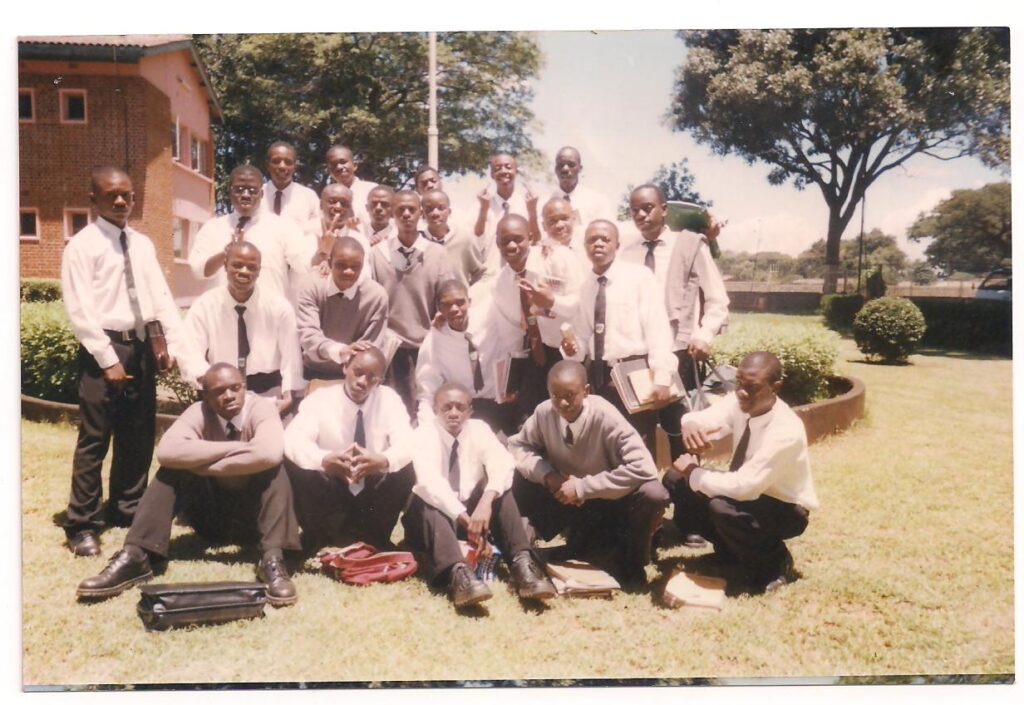
Mr Mbuzi our Chemistry teacher. Mr Katete of Mweru House who said Mwelu and never noticed. The road runs around Arakan Barracks at 4:30am before Sports Day. The class that started as tribes, Kabulonga boys, Matero boys, Kafue boys, Kopala clan, and eventually became one thing entirely-Ayabi.com clan.
I do not know what St Pauls or Hillcrest would have made of me. I know what Kabulonga boys and DK made of me.
The collapsed bridge and missing English result gave me the schools I did not know I needed.
Davis and Shirtliff vs Puma Energy
September 2012. Freshly graduated from UNZA. Months of applications sent out into silence.
Then, within the same week, two interviews. Followed by two offers the week after.
Puma Energy, Depot Superintendent at Lumwana Mine. Davis and Shirtliff, Sales Engineer, Lusaka. Both came through almost simultaneously after months of hearing nothing. That is how life works sometimes. You wait and wait and then everything arrives at once.
I sat down on 27th October with my journal and did what an engineer does when facing a decision. I drew two columns and started writing.
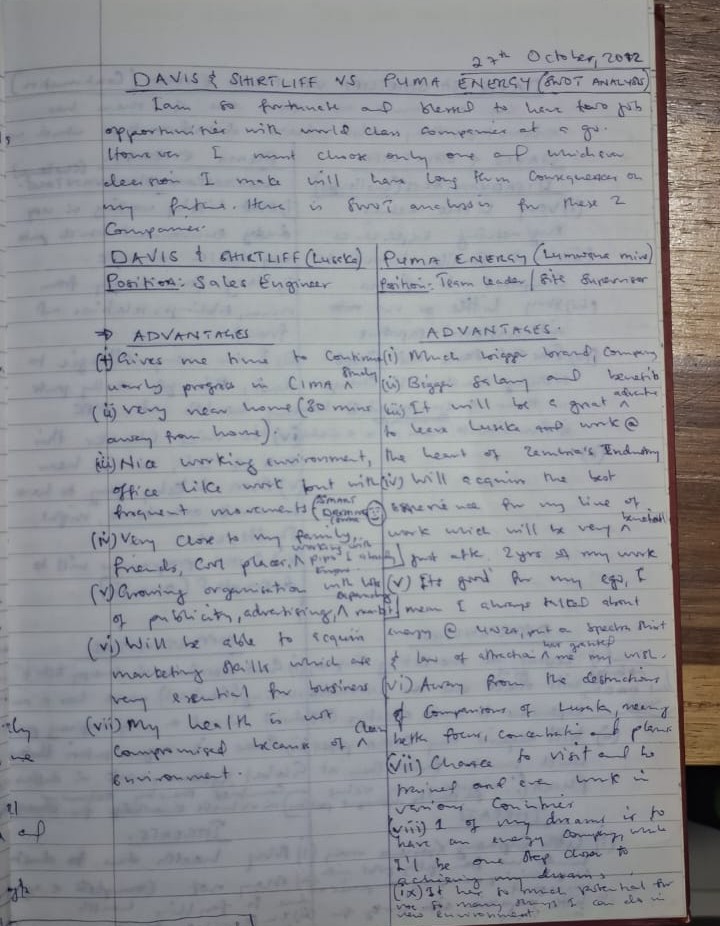
Puma had gone well beyond the interview. I had done the medicals. I was cleared. The offer letter was coming that week. Davis and Shirtliff had already confirmed and given me a report date of 1st November.
I was leaning toward Puma. The name carried weight. Lumwana was in the energy sector, exactly where I had always imagined myself.
Then someone from Puma called.
They needed to confirm my driver’s licence status before releasing the offer.
Provisional, I said. Working on the full one.
The offer did not come.
What I found at Davis and Shirtliff was not what I had drawn on any plan. The work was demanding in ways that stretched me continuously. The responsibilities kept coming before I felt ready for them. And somewhere in that process, across years and branches and problems I had not been trained for, I became someone I could not have become anywhere else. Thirteen years of an organisation that gave me more than I asked for.
A driver’s licence I did not have in time sent me somewhere that shaped everything that came after.
The email I did not want
The bank queue at Atlas Mara in Mukuba Mall, Kitwe. A Friday afternoon in 2019. My phone buzzed. I looked down and saw the sender before the subject line registered.
Chevening Scholarship Committee.
I had spent months on that application. IELTS tests. A professionally upgraded CV. Two UK university acceptances. Behind all of it was a life I had already scripted on the other side of the scholarship. The Masters. The PhD. The UN job. The dollar salary.
I had the whole film written before the audition.
The email said no.
What I could not see in that car park was that getting it would have taken me further down a road I had never honestly examined. The rejection did not end my story. It ended the screenplay. What followed when I finally stopped waiting to be selected was the life that had been available the whole time.
That story is already told in full here.
What the engineer should have known
Perhaps none of this should have surprised me.
I am an engineer. I have spent years working on projects that were drawn, specified, budgeted, and approved before a single thing was built. And in all that time, not one project has ever been built exactly as it was first drawn. Soil conditions change. Suppliers delay. Clients revise what they thought they wanted. Unexpected things surface once you are actually in the ground.
Good engineers do not abandon the project because reality disagreed with the drawings. They assess, they adapt, they redesign, and they keep building.
I have begun to suspect that life works the same way.
The plan is not useless. The plan is what gets you to the site. But what you find when you arrive, and what you build in response to it, is rarely what was in the original specification. And sometimes, if you stay at the site long enough to see it clearly, it turns out to be better than anything the drawings imagined.
What holds all of this together
Think about your own life for a moment.
The relationship that ended and eventually led you somewhere better. The job you did not get that pushed you toward the one that suited you. The course you failed that changed your direction. The city you did not plan to stay in that turned out to be exactly where you needed to be. Most people, looking back honestly, can find at least one thing they are grateful for that arrived first as a disappointment.
The problem is we can only see this looking backward. In the moment of the missed result or the unanswered call or the email that says no, it just feels like a closed door. It takes time and distance to see that the closed door was pointing somewhere.
This is not an argument for sitting back. Every redirection in this story only arrived because I was already moving. The bridge washed out for a boy who had broken the record at his school. The English result was missing from a slip with five excellent subjects. The Puma job fell through for a graduate with two serious offers. The Chevening rejection landed on a man who had built enough of a life to have something worth questioning.
Do your part. Fully. Without reservation.
Then trust the door to God.
Sometimes I wonder what would have happened if that bridge had survived the rainy season in 2001.
I would have crossed it. And I would almost certainly have become someone else.
For years I thought that bridge kept me from my future.
Looking back, I think it carried me there.
Do your part. Fully. Without reservation.
Then trust the door to God. Indeed
As the saying goes-do your best and leave the rest to God. Thank you.