Most of what happens to us disappears.
Not dramatically. Not in the way you forget where you put your keys. Quietly. Without announcement. The way a Tuesday afternoon in Term 2 of Grade 6 disappears. The room, the people in it, the thing the teacher said that morning. Gone. And life continues as though those hours were never spent.
I have been writing things down since 2010 because I noticed this happening and did not trust myself to hold onto what mattered. Sixteen years of notebooks. And one thing they keep showing me, when I read back through old entries, is how much of what I was certain was important has left no trace at all.
A friend shared a photo on his WhatsApp status recently that brought this home in a way I was not expecting.
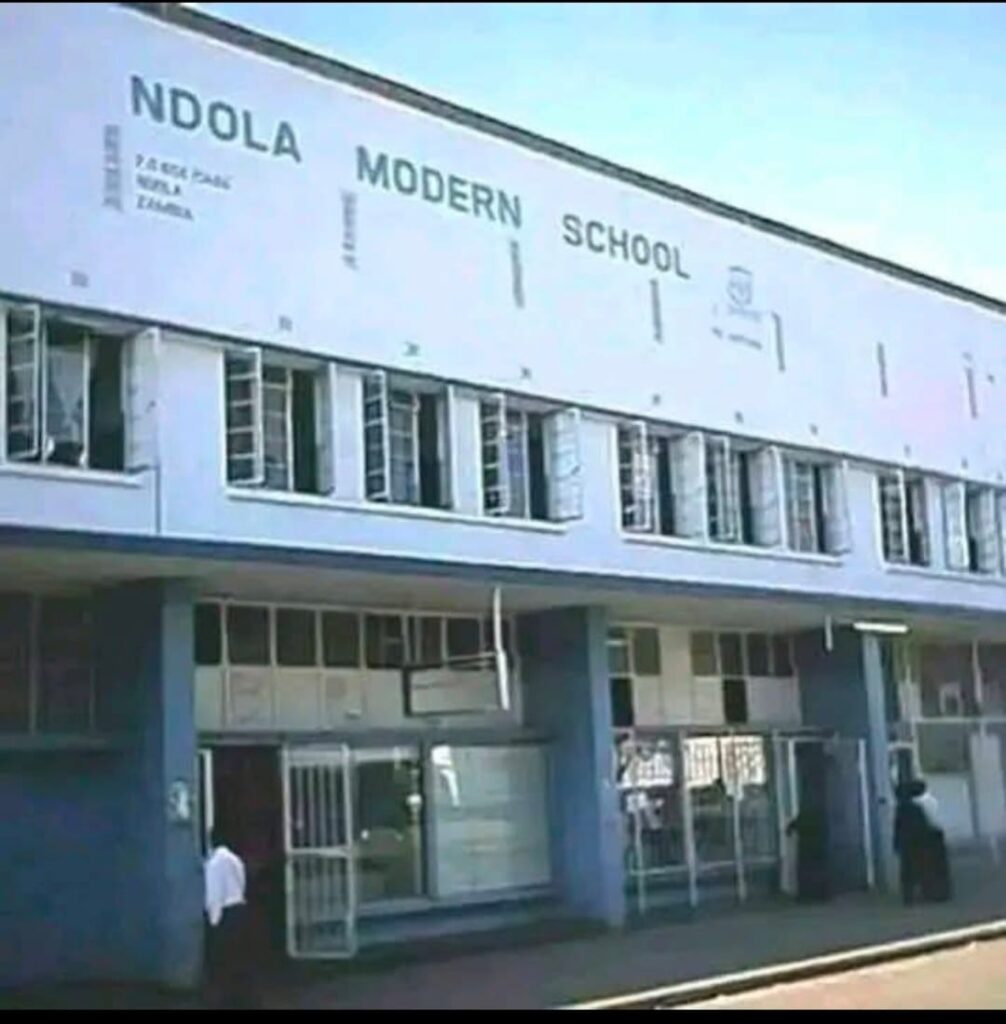
An old school building. White walls. A sign across the front: Ndola Modern School. No caption. The photo was doing what old building photos do, sitting quietly in someone’s status, waiting for the people who would recognise it.
I recognised it.
I was a student there in 1998 and 1999. Grade 5 and 6. Two years behind those white walls near Ambassador Hotel in Ndola before my mother’s job ended and we packed and went back to Lusaka and I never thought about the building again.
I sent him a message. He confirmed he had been there too. Grade 1 to 7. 1994 to 2000. We went back and forth the way you do when something like this surfaces. Names. Teachers. Moments. The fragments that survived.
Then he mentioned a name I was not expecting.
Someone I know well. Someone I have worked alongside for years. Someone I co-founded a company with.
He had been at that school. In a class of fewer than thirty people. For the entire stretch that overlapped with my two years there.
Neither of us remembered the other.
I picked up my journal that evening and wrote down the question that had arrived and would not leave.
If we can forget entire classrooms, what else are we forgetting?
The room we shared without knowing it
Thirty students. Same room. Same teacher. Same timetable. Nine months a year, five days a week. We were about ten years old. Children that age notice everything. The cool kid. The naughty one. The one who always had nice shoes. The one who made the teacher laugh.
And yet.
When we crossed paths again at David Kaunda in 2003, there was nothing. No flicker of recognition. We were in the same hostel, would talk occasionally, moved through the same corridors. We met again at UNZA. Eventually built something together. And in all of that time, across all of those years, neither of us knew we had first been in the same space in a classroom in Ndola in 1998.
Until a photo on a WhatsApp status.
The things that felt enormous in Grade 6
Here is the part that stays with me.
When I was in Grade 5 and 6, there were things that felt enormous. The test I had not prepared for. Whether a certain person in class had noticed me. The small humiliations that felt catastrophic at the time. The social mathematics of who sat where at break. The kind of things a nine or ten year old can lose sleep over without being able to explain why.
All of it gone. Not just faded. Dissolved so completely that I cannot reconstruct what the anxiety felt like, let alone what it was about.
But here is where it stops being a childhood story.
When I read back through my journals, the same pattern is there at a different scale. Pages of energy given to situations that have since resolved themselves without a trace. A period of quiet anxiety about whether I was moving fast enough that consumed weeks of mental space and left nothing behind. Numbers I was chasing that I hit or missed, and neither outcome turned out to matter the way I was certain it would. Conversations I rehearsed that went differently. Impressions I was managing for people I no longer think about.
The Grade 6 version of me was not unusual. He was just an early version of something that keeps happening.
The things that feel most urgent in any given season have a tendency to leave the least trace. Not because they were unimportant in the moment. Because importance in the moment and significance over time turn out to be very different measurements, and we almost always use only the first one when deciding where to put ourselves.
What tends to survive
Two years at Ndola Modern. Thirty people in the same room. And what survived from all of that time is one name.
Bwalya.
Not because she was the most important person in that classroom. Because something about her broke the pattern of ordinary enough to register. Memory does not keep everything. It keeps the things that stood out from the noise.
The results from that year are gone. The lessons are gone. The hours at the same desk five days a week are gone. But one face is still there almost thirty years later, clear enough to name.
That is not a coincidence. That is the filter.
What survives is what was different enough, felt enough, surprising enough to break through the steady flow of the expected. The first time you did something and did not know how it would go. The conversation that went somewhere you did not plan.
The classmate who became a co-founder. Memory released the classroom because the classroom was ordinary. It kept everything that came after because what came after kept breaking the pattern. We stopped just occupying the same space and started actually building something. That is when memory began keeping us.
Most of what fills an ordinary week does not break any pattern. It confirms one. And what confirms the pattern leaves no trace.
The template
Two years at Ndola Modern.
One name survived.
Not because the rest of the people in that room were less worthy of being remembered. Because nothing happened between us that was genuinely felt. We occupied the same space. We were not in each other’s experience.
The same thing is happening right now. Not at a school from the nineties but in this week, this month, this season of your life. Most of what is filling the hours is already on its way out before you have finished experiencing it. The busyness, the things that feel urgent because they are in front of you, the anxiety about outcomes that time will dissolve without asking your permission.
This is not a crisis. Life is supposed to contain ordinary time.
The question is not how to make every moment memorable. That is its own kind of exhaustion.
The question is simpler and more uncomfortable.
Are the things consuming the most of you right now the kind of things that tend to survive? Or are they the kind that felt enormous in Grade 6 and are not there when you reach for them five, ten or twenty years later?
The classroom at Ndola Modern is not the exception.
It is the template.
Most of life is already being forgotten as it happens. The only variable is what you are choosing to give yourself to while it does.