THEY CALLED ME SILENT BANNER. PUBLISHING THIS BLOG IS THE HARDEST THING I HAVE EVER DONE.

3D Success on Blogspot, 7th August 2021. The first post. The beginning of the hardest thing I have ever done.

You know that feeling.

You are in a room, or on a call, or in a group session with people you do not know well. Someone is at the front, leading, and at some point they will ask a question or call on someone. And somewhere in your gut, before anything has been said, before any eyes have turned in your direction, the signal arrives.

It is going to be me.

Not a thought. More like a quiet alarm. And more often than not, when it comes, it is right. The presenter turns. Your name is the one that gets said.

I have had that feeling my whole life. The strongest version of it arrived on the first morning of Grade 9 Term 2 at Kabulonga Boys High School in Lusaka, in 2002.

Mr Chinombwe and the GX

Our class teacher was Mr Chinombwe. He signed his name with GX after it. Not a qualification. Just GX, because his dream was to own a Toyota Land Cruiser GX, and he had decided the abbreviation belonged next to his name before the car arrived. He was that kind of teacher. Warm, encouraging, genuinely invested in where his students were going. The kind of person who told you not to be limited by your imagination, and demonstrated that by announcing his own dream to a classroom of teenagers without embarrassment.

The first morning of a new term he would always do the same thing. Come in, settle everyone down, catch up on the holidays, and then give a general sense of how the class had performed. I had never paid much attention to that part. There had never been a reason to.

But that February morning, before he said anything specific, the signal arrived. My heart started moving in a way it had no reason to. He was speaking generally about results and had not called any names, and yet something in me was already alert.

Then he mentioned me.

Not because something was wrong. Because something had surprised him. Excellent performance. One of the best in the class. The reaction in the room was genuine, because this was a student who had been average at best. Nowhere near the top of anything.

When he walked out, my friend Masheke came over, gave me a pat on the back, and shouted it across the room.

Silent banner.

A few others picked it up. Ah, silent banner, silent banner. The way people repeat a phrase when they are congratulating someone and enjoying the sound of it. Then the moment moved on. The day continued.

But the phrase did not leave.

Breaking the night

Let me go back a few months, to how it had happened.

My mother sat me down one evening and told me something I did not fully understand at the time. You can read that conversation in full here. She was concerned about my grades and the company I was keeping. What I did not write about was what I quietly did next.

I went back to class and started watching the best students. Not obviously. Just observing. Where they sat, what they talked about, what happened after the bell.

What I found was a group with their own culture. They called it breaking the night.

The way it worked: you finished school at 17hrs, went home, slept early, sometimes by 20hrs, and woke at midnight to study through till morning. You would arrive at school the next day still wearing two pairs of trousers. Not because you had not changed. Because you had deliberately put your school trousers on over a second pair when you woke at midnight, to get through the cold of studying in the dark hours. By the time you showed up in class, the two trousers were still on. They were not hiding it. The two trousers were the badge.

The part I found most interesting was not the studying itself. It was what happened after we knocked off from class.

At 13hrs, while other students went home, this group stayed. They would walk from school, past Kabulonga Girls High School next door, and just beyond it, Melisa Supermarket. There was a certain energy to that walk through Kabulonga Girls territory. Boys from a boys school, cutting through, that easy confidence of a group with somewhere to be. But that belongs to a different story.

At Melisa, they would buy a whole loaf of bread. Not sliced. A full hot loaf, the kind you carry under your arm. Then someone would produce empty water bottles and sugar, mix it until it was sweet enough, and that was zigolo. You would sit together, tear into the bread, drink the zigolo. Some students even brought nshima from home, and would eat that too, slowly, before the afternoon session ahead.

Then back to class. Study until 17hrs. Go home. Sleep. Wake at midnight. Begin again.

It was a thing. A real thing. A culture with its own rituals, its own rewards. People looked forward to having something to report the next morning as much as they looked forward to the studying itself.

When someone said they had finished the history syllabus in Term 1, the response was not disbelief. It was eh, that is the spirit, boi. Handshakes. Recognition from people who understood what midnight studying actually cost.

I started joining the Melisa walks. Started trying the midnight sessions at home, quietly, as an experiment. Observing and trying. Observing and trying.

But I would never come back to report it. I would not raise my hand in class even when I knew the answer. I was learning the practice and leaving the announcement behind.

That is why the results were a surprise to everyone. Nobody knew what had been happening. Not because I was hiding exactly. It just never felt like my place to say it.

The character that settled in

Masheke said the words once. A few others echoed them. Then the day moved on.

Nobody at the next school, or at university, or at work ever called me that again. The label did not travel.

What travelled was something harder to name.

I would do good work and not mention it. Build something, plan something, work toward something, and the people around me would not know until the thing arrived. Personal milestones. Things worth acknowledging. I would not post, not share, not announce. Not out of strategy. Just because speaking myself up never felt like something that belonged to me.

At my wedding reception in 2020, my best man Peter gave a speech. We have been colleagues since our time at David Kaunda, and he stood up that evening and said the kind of things only someone who has known you for years can say.

One thing he described has stayed with me. He talked about how things just showed up with me. How I might mention something once, barely mention it, and then it would materialise. He brought up the Audi. One passing reference. And then there was an Audi. He paused, looked across the reception room to where my wife was seated, and said simply: Doc. Mentioned quietly, a long time before. And then there she was.

The room celebrated. And somewhere in that moment I saw something clearly for the first time. Peter was not describing a charming habit. He was describing a pattern that had been running since a classroom in 2002, being narrated back to me at my own wedding by someone who had no idea it had ever been named.

Looking back, I can see it has worked both ways.

There is a version of it that is genuinely useful. The discipline of private preparation, the confidence of knowing you have done the work regardless of who is watching. But there is another version. The first time I was offered a management role, I hesitated. I went home and told my mother I was not sure I was ready. There have been rooms I stayed outside of, things I did not step into, moments I let pass. Not because I could not, but because the character did not include going forward before being called. Whether those moments were right or wrong I cannot say with certainty. But they were shaped by something I had not consciously chosen.

The banner goes public

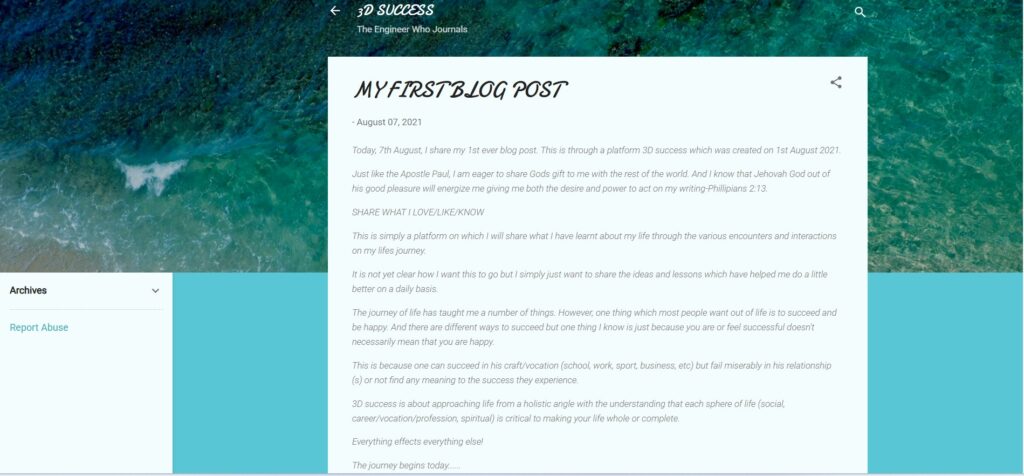
In 2021, I decided to start writing publicly.

I set up the site on Blogspot. I wrote the articles. I wrote about starting then, the idea that you do not have to wait until everything is perfect before you begin. What I did not write about was what the beginning actually felt like.

One Saturday afternoon I sat at my laptop and gathered something. Not quite courage, more like resistance to my own resistance. I clicked publish. Then I had to go further. Share the link. On Facebook. On LinkedIn. Say to people who knew me: here is something I made.

My hands were damp. There was that sickening pull in the stomach, the kind that makes your body want to stand up and leave before you can do the thing. I clicked share. Then I stood up immediately and walked out of the room.

I was alone. Nobody was watching. And yet the feeling was completely real.

Here is what I understand about that feeling now.

The silent banner does not announce. The work should simply exist, be found, speak for itself. That is the logic the character runs on. But a blog is the opposite of that. Every article is a hand raised. Every share is a voice saying: I was here, I thought this, I am putting this out. By writing publicly, by sharing with my name attached, I was not being a silent banner anymore.

I was being a public one.

And the friction I felt, the damp hands, the sickening pull, the immediate need to leave the room, was not just nervousness. It was the specific friction of going against a character I had been living inside for nearly twenty years.

The writing went quiet for a while after that — I wrote about that season in a piece called Three Years on Autopilot. When I came back I moved from Blogspot to WordPress, and then sat on the new site for months before sharing anything publicly again. In February 2026 I finally did, with a piece called The Cost of Invisible Progress. Each time, the same friction. Each time, the same choice.

What I keep choosing

The feeling has not gone away.

Every time I publish, the gut signal arrives. The question underneath it: who asked you to speak?

I publish anyway. Not because the discomfort has passed. Not because I have resolved the character. But because I have started to wonder whether the discomfort is not a reason to stop but a reason to continue. Whether the friction of going out of character, doing the thing the role you inherited did not include, is sometimes exactly where growth lives.

Maybe the silent banner does not have to stay silent.

Maybe, once in a while, he picks up the mic.

Not because he has been selected. Not because someone pointed at him and said: you, go. But because he decided, against his own grain, against the character that has been running quietly since a classroom in 2002, that this time he would go first.

That is the hardest thing I have ever done. And it is also, I have found, one of the most worthwhile.

Most of us are carrying something like this. Not silence necessarily. It could be anything. A role that settled into us so gradually we stopped noticing it was a role and started thinking it was simply who we are. Something said about us when we were young enough that we did not think to question it. A character we stepped into without auditioning, that has been quietly shaping which rooms we enter and which ones we stand outside of.

The interesting thing about these characters is not that they are wrong. Often they are built on something real. The question worth sitting with, the one that takes longer than a single reading to answer, is simpler than it sounds.

Is this still mine? Or am I just still playing the part?

I JUMPED OUT OF A PLANE. SHE WASN’T EVEN WATCHING.

Skydive Dubai, 2018. 4,000 metres above the Palm Islands. The most alive I had ever felt.

2018 was one of the best periods of my life. It was also one of the most embarrassing though I did not know the embarrassing part until much later.

I had recently ended a relationship I should not have ended. With the woman who is now my wife, actually. But at the time, she had moved on. She had a boyfriend. I had an ache in my chest that had not shifted in months and a YOLO energy that was making some questionable decisions on my behalf.

So naturally, I jumped out of a plane.

The plan that started as a joke.

My sisters and I had been talking about a trip for years. Dubai kept coming up. Every time we were together someone would say: we should really do Dubai. And then life would continue. The following year someone would say it again.

In 2018, something different happened. We were having dinner together and the conversation came up as usual. This time, instead of letting it dissolve, I opened a WhatsApp group that same week.

I named it “Siblings Destinations 2018.”

That was all it took. Within the first week, both sisters had their tickets. I did not yet have the money so I borrowed K5,000 from a friend, bought the ticket, and sent proof to the group. There was no turning back. Once the ticket exists, the trip exists.

This is probably worth pausing on because it has become one of my most reliable lessons: a trip that people talk about for two years can happen within one month once somebody creates the WhatsApp group.

We flew Emirates over the Heroes and Unity Day long weekend, four days, with leave either side to make it count. I had only ever been on Kenya Airways. The difference was noticeable. I had WiFi. I had more movies than I could watch. I was also aware in a way I hadn’t been on previous flights that this was already working. We had stopped talking and started doing.

The part I paid for with an iPhone X.

When I had been researching Dubai activities, I came across Skydive Dubai. I watched the videos. I read about it. I looked at the prices.

And then, before the sensible part of my brain could schedule a meeting to discuss the matter, I paid for it.

Right there. From Kitwe. Months before the trip. No consultation, no spreadsheet, no sleeping on it. Just a man and a payment screen and a very brief window before common sense returned. I knew myself well enough to know that if I closed that tab, I would open it again six times, read the same reviews, and still be reading them when we landed in Dubai. So I paid. Immediately. Irrevocably. With the specific energy of someone locking a door and throwing the key into a river.

That payment came at the cost of an iPhone X I had also been planning to buy while in Dubai. The one with no home button, the full OLED screen, the Face ID that everyone was talking about. The phone that in 2018 felt like the thing to have. I chose the skydive instead. And looking back, I am grateful for that trade every single time.

At the time though, the person I most wanted to impress was Pauline, the woman I had let go and was trying, with limited success and quietly, to win back. She loved adventure. She was the kind of person who would understand jumping out of a plane. I arrived in Dubai with an idea of who I was performing for. Though if I am honest, there were other reasons I needed that trip too, reasons that live on a different page entirely.

4am and the only Black man in the room.

My sisters knew I was going early. When I told them the departure time, little sis wished me all the best and went back to sleep. That was the correct response.

I woke up at 4am, put on my new Dubai clothes, bought during the trip, naturally and got a cab to Skydive Dubai.

When I walked in, I looked around the waiting area. Whites. Some Chinese. Indians. Several other nationalities I could not immediately place.

No other Black person anywhere.

I was the odd one out and I was very aware of it.

A woman came to take a short video of me before the jump — name, where are you from, why are you here. I answered. Watching it afterwards, I can tell I was nervous and not saying nearly enough. I gave brief answers and looked slightly startled, like a man who had just realised he had paid in advance for something that was actually going to happen.

Then my instructor arrived.

He was Filipino. Cool in the way that action heroes are cool, unhurried, completely unbothered, the kind of physical presence that makes jumping out of aircraft look like something reasonable people do before lunch. He took me through the procedure. What to do, how to hold my body, how to land. I listened carefully, as an engineer does, and retained approximately none of it.

We walked to the plane.

The last three seconds before everything changed.

There is a moment, just before you jump, that I was not prepared for.

You have been inside the plane. The plane has climbed. Everything has been going in a logical sequence of events. You are with a group. There is noise and movement and things happening.

And then you are at the door.

And it is open.

And there is nothing outside that door except Dubai, very far below, and sky.

My instructor shouted over the wind. Counted from three. And before I had finished processing what three meant, we were out.

My heart. I am not sure it was beating. For a moment, I think I may have briefly stopped existing.

The freefall is fast. Genuinely fast. The kind of fast that your body has no category for. Everything I had been carrying; the plans, the ache, the performing, the waiting. Gone. There is only this. The wind. The speed. The altitude. The absolute, undeniable realness of the present moment.

He released a small parachute to slow the descent. I felt it catch. He tapped my shoulder, my signal to start moving, to look at the camera, to be the person in the video.

I pushed my arms out wide. The camera operator appeared from somewhere. I made poses I cannot quite explain but which felt, in the moment, like the only reasonable response to being suspended 4,000 metres above the earth with Dubai laid out below me like a map.

And then he released the bigger parachute.

It brought everything to a sudden, gentle, floating stop.

Something ran down my face. I will not try to name it. I am not sure I have the right word for what happens when your body encounters something so far outside normal life that it simply responds the only way it can. I was not sad. I was not relieved. I was just there. More there than I could ever remember being.

I landed. I lay on the ground and shouted. I did not care who was watching. The embarrassment centre of my brain had taken the morning off.

She wasn’t even checking.

When I got back to the hotel, my sisters were waiting. I described every detail. They were proud, excited, wanted to see everything.

That evening, I shared it on my WhatsApp status. The response was extraordinary. People I barely knew were sending messages. Strangers said I had inspired them. Friends told me I was crazy in the best possible way.

I checked to see if Pauline had viewed it.

She had not.

I am laughing about this now, writing it down. The universe has a way of making a point.

She saw it eventually, much later, after everything between us had changed. She had something to say about it, of course. She always does. But that is a story for another day.

What the freefall was actually teaching me.

That season, 2018, was the year I started doing things for the first time. Something had cracked open and I had stopped waiting for the right conditions to start living.

That year held more firsts than any year I can remember. The Dubai trip itself, first time out of Africa, first time on Emirates, first time standing in a desert. The skydive, a first of a different order. Then the family reunion we finally pulled off, cousins and relatives all in white tees and blue jeans, dancing in a circle at midnight to Omunye, to Tyoka, to every song that had no business hitting that hard in grandma’s yard in PHI.The team building I planned with my work mates that took us all the way to Siavonga; camping on the shores of Lake Kariba, a campfire, music carrying across the water, the best night in that chapter of my professional life. Concerts. Road trips.

I had always been a man with plans. The next qualification. The next promotion. The next rung that would finally deliver the feeling of arrival. I wrote about that pattern in an earlier article, Whose Plan Have You Bought? The way we absorb other people’s definitions of success and spend years running inside them, certain that the next milestone will be the one that finally settles things.

What 2018 cracked open was not another plan. It was an appetite. For firsts. For showing up fully to the life that was already here.

Two accounts. One life.

Jim Rohn said something I have carried for years: life is a collection of experiences, their frequency and intensity.

I had read that line and thought I understood it. And in one sense I was collecting qualifications, titles, milestones. A degree is real. A promotion means something. But there are two separate accounts, and achievements only go into one of them. What you actually live goes into the other. And for a long time I had been putting everything into the first while telling myself the second would fill itself up eventually after the MBA, after things settled down, when the time was right.

The second account does not fill up on its own. It only grows when you deliberately show up for it. When you create the WhatsApp group. When you pay before common sense talks you out of it. When you get on the plane at 4am and walk to the door.

The freefall above Dubai was less than three minutes. It cost me an iPhone X, a borrowed K5,000, and a 4am taxi ride across a city I had never been to before. What it deposited into the second account permanently, irrevocably, beyond the reach of any bad week or difficult season, may be the best investment I have ever made.

That second account is the one you will think about when things go quiet. Not the certificates. Not the titles. The door at 4,000 metres. The knee on the sand at Lake Tanganyika. The dancing in the yard at midnight. The ninety five year old grandfather sitting in your living room for three days.

The time is not going to announce itself. What comes instead is more weeks that look like the last ones, more years that passed without you quite noticing, more conversations that start with we should really do that someday.

The experience does not wait for you to be ready. It happens when you show up for it. And when it happens, fully, physically, with your whole body in it, it goes into the account and stays there.

Life is a collection of experiences, their frequency and intensity.

The door is open. What are you waiting for?

EVERY REPORT CARD SAID THE SAME THING. I BECAME AN ENGINEER ANYWAY.

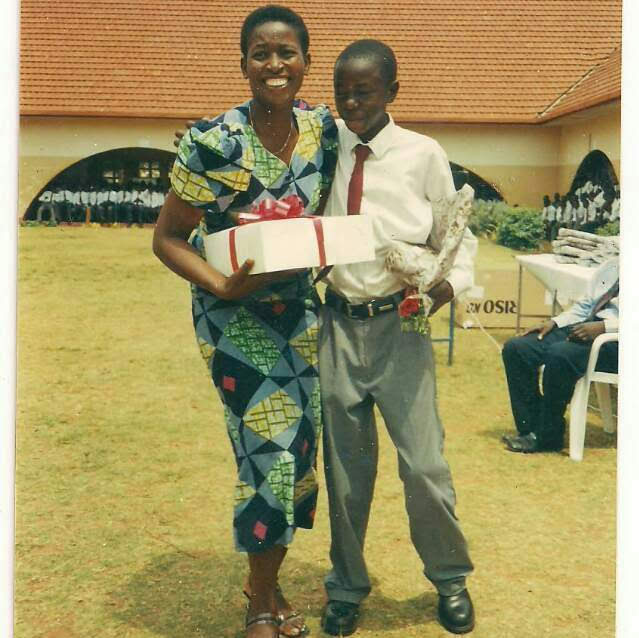
Kabulonga Boys prize-giving, 2002. Best student in History and Civics. My mother was there.

My mother kept my report cards.

All of them. Tucked somewhere in the house in that way Zambian mothers keep things — not filed, not archived, just kept, the way important things survive. A birth certificate, a church programme from 1999, a school photograph where everyone is squinting into the sun. When I was home some years ago she put the folder on the table without saying much and left me with it.

I sat down and went through every single one.

The pattern that was hiding in plain sight.

There is a pattern in those cards that is almost funny in how consistent it is. Grade 9, Term Two, 2002 — History: 89%, Grade 1, Excellent result. Civics: 91%, Grade 1, Excellent result. Mathematics: 56%, Grade 3 — and the class teacher, clearly a man who knew where the real story was, used his comment section specifically to encourage me to keep working hard in mathematics. Not history. Not civics. Those were fine on their own. It was the mathematics and sciences that needed the talking to.

And this was not a one-off. Card after card told the same story. The social sciences — History, Civics, Geography, English — came with an ease that I did not earn so much as simply receive. The sciences were a different matter entirely. I could get there most times. But it would take two, sometimes three times the effort to reach results that the humanities handed over without argument.

One at a time, spread across years of growing up, these were just results. You checked the grade, your parents nodded or said something encouraging, you moved on. But all of them together on the table, one after another, they were telling something clearly. The same thing, in the same direction, year after year.

I had just never thought to ask what they were saying.

The subjects that never felt like work.

History, for me, was not a subject. It was a story that kept getting better. Mwata Kazembe holding court in the Luapula Valley. Shaka reorganising an entire army from the ground up — changing how men fought, how they moved, how a kingdom projected power. The way civilisations rose not by accident but by someone, somewhere, deciding to organise people differently. I could sit with those questions for hours. Not because I was disciplined. Because I was genuinely curious. The understanding did not need to be forced. It simply arrived.

Civics worked the same way. Why do countries govern themselves the way they do? How does one event in one place ripple into something that changes a map on the other side of the world? These were not exam questions to me. They were interesting.

I mention this not to go back there and feel good about it, but because that ease — that specific sensation of a subject fitting the shape of your mind — is not nothing. It is data. And data, as I would later be told repeatedly in engineering school, does not care about your feelings. It simply tells you what is true.

The day the headmaster called my name.

The prize-giving at Kabulonga Boys was around 2002. The school grounds were arranged the way they get arranged for these occasions — students lined up in their clean uniforms, parents gathered, the headmaster Mr Ziwa standing at the front with the particular authority that headmasters carry on days like this. When he announced the prize for best student in History and Civics and said my name, I walked up.

My mother was there. She had the kind of smile that a camera cannot quite manufacture — completely present, completely delighted, holding the gift box with the red ribbon between us. I was standing beside her trying to look composed the way a thirteen-year-old tries to look composed when he has just been called out in front of everyone. Trying, also, not to look too much like a mama’s boy in front of his classmates. She was very excited. I was very happy and also very aware of my friends watching.

It is a good photograph. But what it does not show — what no photograph can show — is that at no point during that entire day did it occur to me to connect what I had just been recognised for with what I might do with my life.

Not even for a moment.

The picture in my head was already complete.

Because I already knew what I was going to do.

There was an engineer who lived in my neighbourhood in Kamwala, and he left quite an impression on me. I do not remember exactly when I started paying attention to him, but children notice these things — the car, the house, the general impression of a life that has arrived somewhere. He worked for ZESCO. And the thing about ZESCO engineers, as everyone knew those days, was that they earned serious money. This was not a rumour. This was neighbourhood fact, the kind that gets repeated with the quiet authority of something settled.

In my mind, the picture assembled itself completely and without effort: this is what success looks like. This is what you work towards.

And there was something else layered on top of that picture. The brilliant students — the ones who got the distinctions, the ones the teachers pointed to — they did engineering. Or they did medicine. Those were the destinations that a certain kind of academic performance was supposed to lead to. Social sciences were not in that conversation. Not because anyone sat me down and said so explicitly. It was simply understood, the way many things are simply understood when you are young and absorbing the world around you.

The report cards were on one side of the table. The picture in my head was on the other. The picture won, and it was not even a competition. The decision did not feel like a decision at all. It felt like common sense.

Which is, of course, exactly how these things work.

“You were sold too.”

I wrote about this in 2021 — back when this writing was just beginning to find its voice — after a phone call with an old friend from school. We had been classmates from junior secondary all the way through high school, and we were at the age where conversations had stopped being about what people were doing and started being about why we had done the things we had done.

He told me that in high school, biology and chemistry had genuinely interested him. That he had liked those subjects. But he had gone into accountancy.

I asked him why.

He laughed and said a classmate had once made a remark — casual, completely offhand, the kind of thing a teenager says without any idea of the weight it carries — about accountants at KCM and Mopani pulling K40 pin per month.

“And just like that I was sold,” he said.

We laughed about this for a while, the way you laugh at something that is funny and also slightly uncomfortable. Then he asked about my path. I told him about the ZESCO engineer. About the picture I had formed as a child, without quite knowing I was forming it. About the report cards that had been saying something consistently for years that I had never paused to read.

He was quiet for a moment.

“You were sold too,” he said.

We laughed again. But that phrase sat with me for a long time after the call ended. Because the interesting thing about being sold something is that it never feels like a sale. It feels like your own idea.

The evidence was always there.

The data was consistent for years. The evidence was in the folder. Every teacher across every school was pointing in the same direction, reliably, without coordination, simply by recording what they observed. And none of it was consulted when the actual decision was made — not because it was hidden, but because the picture in my head of what a successful life looked like was already so complete that there was no question left to ask.

This is not unusual. In fact it is remarkably common. The parent who decides that medicine is the only destination for a child who shows any academic ability. The uncle whose career becomes the template for the next generation. The classmate who mentions K40 pin at exactly the right moment. Most of us do not choose our paths so much as we absorb them. We look around at what success appears to look like in our immediate world, and we aim at that picture, and we call it a plan.

The report cards are still in the folder.

Whose picture was in your head?

The question I keep returning to is not what should I have done differently. That road goes nowhere useful.

The question is simpler and more uncomfortable than that.

What data do you have about yourself — consistent, reliable, quietly accumulated across years — that you have never actually sat down and read? Because it is probably there. In the subjects that never felt like work. In the tasks you finish and somehow still have energy left. In the things people keep asking you for help with, not because you advertised, but because you are apparently the person who does that well.

The evidence has a way of accumulating patiently, in folders and in memory, waiting for the day you decide to open it.

Whose picture was in your head when you made your biggest decisions? And was it yours?

I would genuinely like to know. Leave a comment below.

THE THING I KEEP PUTTING OFF

Q2. One thing. Starting this week.

There is something I have been meaning to do for months now.

I planned to start in Q1. Told myself: this is the quarter. No more delays.

And then Q1 ended.

I wrote earlier this month where it went. Three months vanished.

But here is what I did not say:

Q1 did not just disappear because time moves fast.

It disappeared because I kept putting off the one thing I said I would do.

The Real Problem

I set seven goals for Q1.

All important. All worth doing.

And that was the problem.

The thing I actually cared about most got buried under six other priorities.

Every week, I would tackle the easier ones first. The ones with clear steps. The ones other people were waiting for.

And the thing I actually wanted to do? Next week. Always next week.

Not because I did not care.

Because it was a goal for the year. Not the quarter.

So there was always time. Always later.

Until Q1 ended.

And it was still sitting there.

What Changed

I just finished reading a book called Four Thousand Weeks by Oliver Burkeman.

Four thousand weeks. That is roughly how long we live. If we are lucky.

The book hit me hard. Especially one section about deciding what you will fail at.

Not what you will succeed at. What you will deliberately not do.

Because you cannot do everything. And pretending you can just means you do nothing well.

So I sat down to plan Q2.

And instead of listing seven goals again, I asked a different question:

What if I only focused on one thing this quarter?

The thing I have been putting off.

Not as one of seven goals. As the goal.

Why This Quarter

A year is too long.

When something is a goal for the year, it never feels urgent in April. Because you still have eight months left.

So you prioritize everything else. The urgent things. The deadlines this week.

And the thing that matters most? It can wait.

Except it cannot.

A quarter forces the decision.

Ninety days. That is it.

Either I do it. Or I do not.

No “I will get to it later.” And no hiding behind six other priorities.

Just: did I start or not?

What This Looks Like

So here is my Q2.

One thing.

The thing I have been putting off for months.

Not because I will finish it in ninety days. I might not.

But I will start.

And that is what I have been avoiding. Starting.

Because as long as it stays in “someday,” it is safe. It cannot fail.

But it also cannot happen.

What I Am Sitting With

I do not know if this will work.

I do not know if focusing on one thing is the right approach.

But I know seven goals did not work. The thing I cared about most got crowded out.

So I am trying something different.

One thing. This quarter. Starting this week.

Not perfectly. Not with everything figured out.

Just starting.

The Question

So here is what I am asking myself.

And maybe it is worth asking yourself too.

What is the thing you keep putting off?

The thing that has been on your list for months. Maybe years.

The thing you keep saying you will start. Next week. Next quarter. Next year. Someday.

What if you made it the only thing for this quarter?

Not one of seven goals. The goal.

Maybe you finish it. Maybe you do not.

But at least you start.

Because Q2 will disappear just like Q1.

And at the end of it, you will either have started.

Or you will still be planning to.

What is your one thing?

THE ROAD ALWAYS WINS

Every road goes somewhere. The question is whether it is going where you want.

I had a conversation on a flight back from a branch visit that I cannot stop thinking about.

I was seated next to our Managing Director. We got talking about people. How some leave stable situations chasing “bigger” opportunities. From the outside, everything looks like success. New cars. Lifestyle upgrades. All the signs of having made it.

Then a few years later, you hear they are broke. Completely broke.

I asked him how that happens. How does someone go from apparent success to total collapse?

He said something along those lines that has stayed with me ever since — that as long as someone stays on a specific path, the destination does not change. The path has to change first.

He reached into his bag and handed me his Kindle. On it — The Principle of the Path by Andy Stanley.

I read until we landed. And something shifted.

The Siavonga Problem

You are in Lusaka. You want to go to Siavonga.

But you get on the road heading north toward Ndola instead. It does not matter how badly you want Siavonga. How many times you check the map. How early you left.

You will end up in Kabwe.

The road determines the destination. Not your intention. Not your commitment. Not how desperately you want to arrive somewhere else.

Obvious for physical journeys. Somehow, we forget it entirely when it comes to life.

The Mistake We Keep Making

We think the problem is willpower. Try harder. Commit more. Want it badly enough.

So we make resolutions. Set goals. Renew intentions.

The alcoholic says: I will drink less this year. The person drowning in debt says: I will save more this month. The professional stuck in mediocrity says: I will work harder this quarter.

Better intentions. Same road.

You cannot solve a problem while staying on the road that created it.

The alcoholic does not need to drink less. They need to get off the road of drinking entirely. The person in debt does not need budgeting tips. They need to get off the road of living beyond their means. The stuck professional does not need to work harder. They need to get off the road altogether.

The problem is never the speed. The problem is the road.

When I Thought Changing Cars Would Fix It

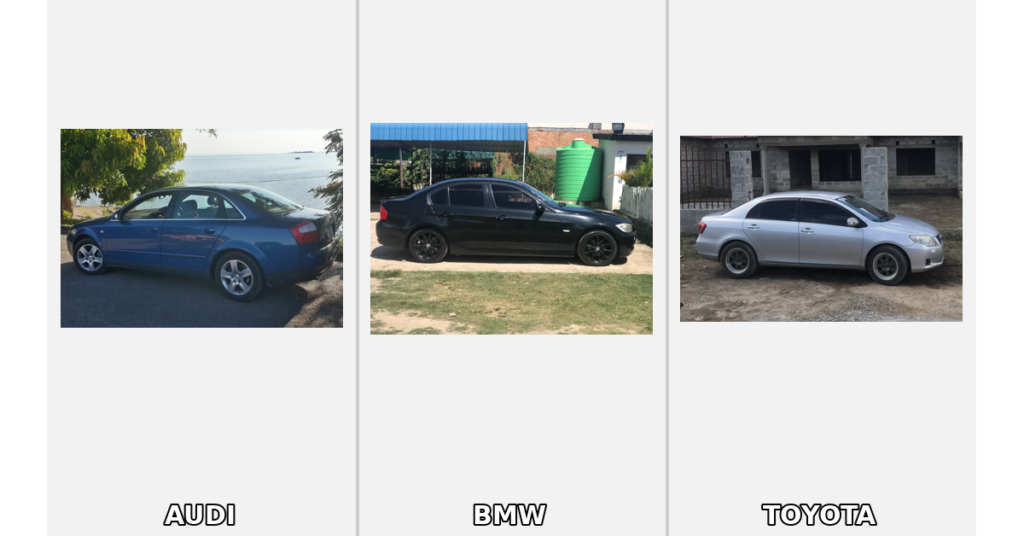
Roads show up in the strangest places. I discovered this through an Audi, a BMW, and eventually a Toyota — a journey I have written about in full, but the short version taught me that changing the vehicle means nothing if you never change the road.

My first car was an Audi A4. Bought in my first year of work. I was proud of it. But maintenance was draining me. Repairs were constant. I was stressed.

So I thought: change to a BMW and fix it.

The BMW fixed nothing. I was still on the road of impress people with what you drive. Still on status over stability.

Better car. Same road. Same stress.

It was only when I downgraded to a simple Toyota that everything shifted. Not because a Toyota is superior. It is not about the car.

It is about the road.

The Toyota put me on live within your means. On financial peace over appearances. That road led somewhere completely different.

The transformation came when I got off the road entirely — not when I upgraded hoping things would improve.

The Goals That Change Nothing

Most of us write new goals that are just better intentions for the same old roads.

Work out more — same road of inconsistency, new motivation. Save more money — same road, tighter budget. Spend more time with family — same road of putting work first, guilt-driven weekends.

Better goals. Same roads.

Stay on those roads and you end up exactly where you ended up before. Good intentions. No real change.

The question is not what do you want to achieve?

It is what road are you actually on?

Where Does Your Road Lead?

Sit with this honestly. Financially. Relationally. Professionally. Health-wise.

If you keep doing exactly what you are doing today — where will you be in a year? Five years?

That is where you are heading. Not where you hope to be. Where the road actually goes.

Unless you change the road.

How You Actually Change Direction

It requires honesty — admitting the road you are on is not taking you where you want to go. It requires courage — choosing differently when everyone around you stays on the old road. And it requires patience — you do not undo years of wrong direction overnight.

You do not have to change everything at once. One road leading the wrong direction is enough to start with. And sooner feels better than waiting for the right moment — because the right moment rarely announces itself.

The Road Always Wins

This is what the MD was pointing at.

Those people who collapse after years of apparent success? Not lazy. Not stupid. Just on the wrong road. No amount of hard work or good intentions could change where it led.

The road always wins.

You can work harder. Plan better. Try more. But the wrong road still delivers the wrong destination.

So here is the only question that matters right now:

What road are you on? And where does it lead?

If the answer is not where you want to go, walking it faster will not help.

The road you choose today determines where you arrive tomorrow. You do not drift to good destinations. You get there by choosing the right road — and staying on it.

WHERE DID Q1 GO?

At work, quarterly reviews force us to check: plans versus reality. Your life deserves the same attention.

It is March 29th, 2026.

End of the first quarter.

And I keep asking myself: How is it already over?

I wrote in December about how time seems to move faster now. How weeks blur into months.

But Q1 2026 did not just blur. It vanished.

Iran, Israel, and the USA at war. Venezuela’s president captured. Africa Cup champions crowned. Then stripped. Then re-crowned. Zambia’s elections now just four months away.

The world moved. Fast.

And somewhere in the middle of all that movement, three months disappeared.

I started journaling again in November. Launched the blog in January. Wrote every week.

And now it is the end of March.

Where did the time go?

The Forcing Function

At work, our financial year starts in December.

So end of February was Q1. And in March, we had quarterly reviews.

Every department. Every manager. Plans pulled out. Progress measured.

What did you say you would do?
What actually happened?
Are you progressing or regressing?

Because here is what I have noticed: Without a forcing function, you forget.

The day-to-day takes over. Emails. Meetings. Urgent things that feel important but are not part of the plan.

And before you know it, three months are gone.

Then December comes, and you are scrambling to remember what you said mattered in January.

The quarterly review forces you to step back. Pull out the plan. Look at what you said. Compare it to what you did.

Am I actually moving toward what I said mattered? Or am I just busy?

Progressing or Regressing

Here is the uncomfortable part.

You are either progressing or regressing. There is no standing still.

Even if you do nothing, time moves forward. The goal that felt achievable in January feels harder in March.

Not because it changed. But because you did not move toward it.

This is what the quarterly review exposes. Not to shame you. Just to show you the truth.

You said this mattered. Did you act like it mattered?

We are good at making plans. We are terrible at following through.

Not because we lack discipline. But because we do not check in.

Progress does not happen automatically. It happens when you measure. When you notice. When you adjust.

And here is something else the work review reminded me: Plans can change.

At work, our revenue budgets were adjusted mid-quarter. Not because the original plan failed. But because new information emerged. Circumstances shifted.

The review does not demand you stick rigidly to what you said in January.

It just asks: Given where you are now, what needs to adjust?

Sometimes you push forward. Sometimes you pivot. Sometimes you scrap the plan entirely and restart.

The point is not perfection. The point is awareness.

When Was the Last Time You Did Something for the First Time?

Seth Godin asked that question. It haunts people who hear it.

Because the honest answer for most of us is: I cannot remember.

I felt this tension in Q1.

For years, I had been running the blog on Blogspot. At the start of the year, I migrated to WordPress. Better tools. More options. A platform to share ideas differently.

It opened up possibilities I had not considered before. Different ways to present thoughts. New formats to explore.

Not a complete transformation. Just more options.

And it made me ask: What else have I been avoiding just because it is unfamiliar?

What other platforms could I explore? What other ways could I share what I am learning?

Because as I wrote in January, life is not just the passing of time. It is the collection of experiences and their intensity.

And you cannot collect experiences if you only repeat what you already know.

Why Your Life Deserves This

Here is what I want you to hear.

Your life is not background noise.

It is happening now. Today. This quarter.

And if you do not treat it like it matters—if you do not pause to check in, to notice, to adjust—it will pass.

Not because you failed. But because you did not pay attention.

The people whose lives look intentional? They just check in more often.

They pause quarterly and ask: Am I moving toward what I said mattered?

And when the answer is no, they adjust.

Small shifts. One-degree changes. But consistent.

And over time, those small course corrections compound into completely different destinations.

A one-degree shift does not look like much in the moment.

But travel for 100 kilometres with that one-degree adjustment? You end up in a completely different place.

The Questions Worth Asking

Easter this week presents a moment. Not necessarily quiet. Not necessarily a holiday break. But a moment nonetheless.

A moment to pause and ask questions worth asking.

Not just about work. About your life.

At work, we have dashboards. Graphs. Charts. Revenue numbers. Performance metrics.

We can see exactly where we are versus where we planned to be.

But in life? We do not have dashboards.

No graph showing how close you are to the relationship you want. No chart tracking whether you are building the life you said mattered.

So you have to create your own review. Your own check-in.

And it does not need to be complicated.

Just sit down and ask:

What did Q1 teach me?

Not what you accomplished. But what actually happened when you were not performing.

Where did I show up for what I said mattered?

Maybe it was small. Maybe nobody noticed. But you know.

Where did I disappear?

The goals you said you cared about but did not act on. The priorities you claimed but did not protect.

Am I progressing or regressing?

Because there is no standing still.

What needs to adjust for Q2?

Not what needs to be perfect. Just what needs to shift.

And here is the important part: Your plan can change.

Just like at work, where budgets get revised and strategies get adjusted based on new information.

You are allowed to pivot. To scrap what is not working. To restart with a better approach.

The review is not about judging yourself against a fixed plan.

It is about asking: Given where I am now, what makes sense for the next quarter?

The Invitation

I am not writing this from the other side. I am writing this from the same place you are.

Three months gone. Nine months ahead.

So here is what I am inviting you to do. Not someday. This week.

Sit down. Pull out whatever plan you made in January. Or the intention you had. Or the vague sense of what you wanted this year to be.

And ask yourself the questions:

Am I progressing or regressing?

Where did I show up for what I said mattered?

Where did I disappear?

What needs to adjust for Q2?

You do not need graphs or charts or performance dashboards.

You just need honesty. A willingness to look. And the courage to adjust.

Because here is the truth:

Your life matters. Not just the big milestones. The everyday decisions. The small adjustments. The quarterly check-ins.

The life you are building right now—in the unremarkable middle of Q2—matters.

And it deserves your attention.

Not someday. This week.

Three months gone. Nine months ahead.

Are you progressing or regressing?

This week, pause. Check in. Adjust.

ADULTS ARE JUST BIG KIDS (WHO FORGOT HOW TO PLAY)

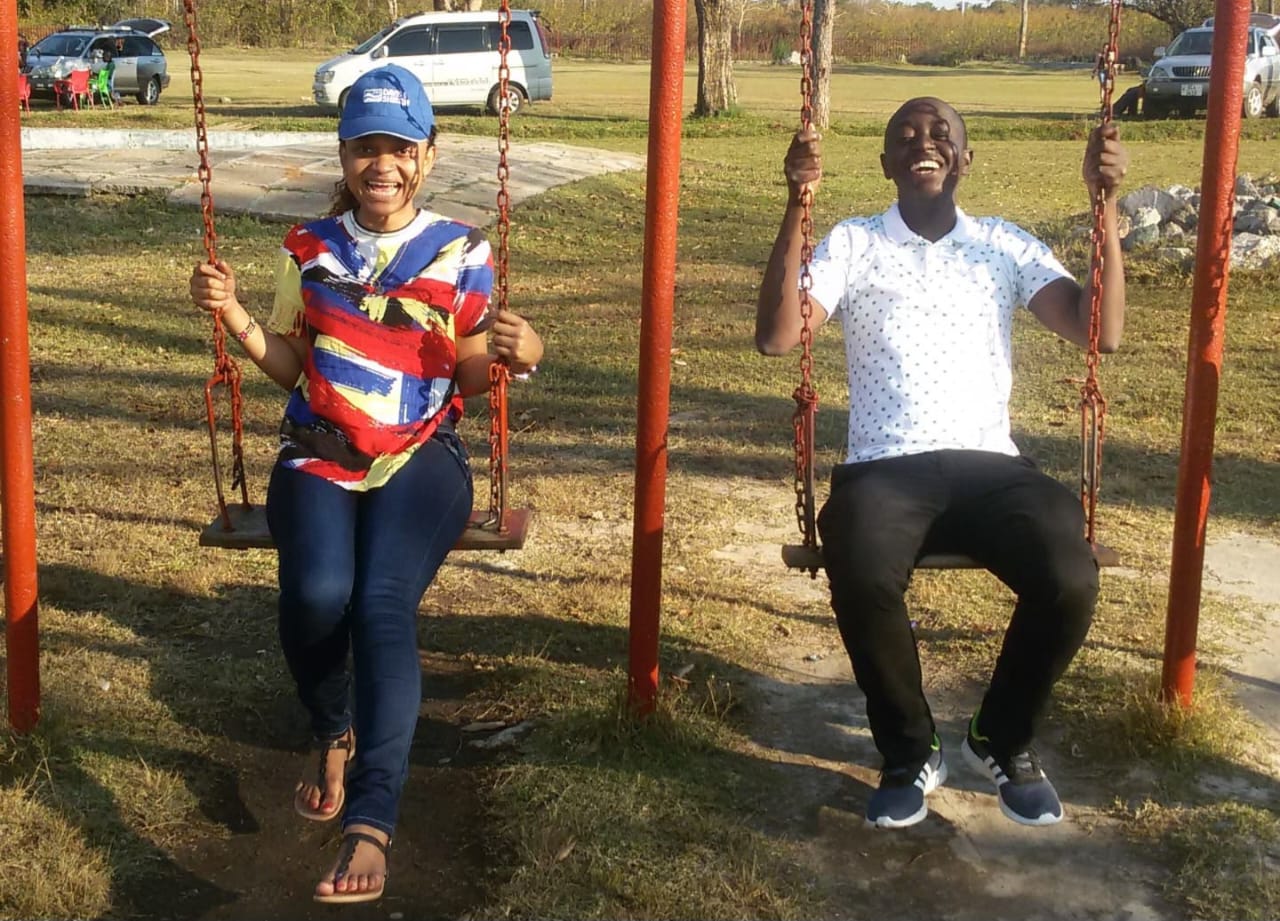
Mindolo Dam, 2016. Our first date. Two swings, two people laughing like kids. Looking back, maybe this is why it went so well.

In 2021, I was on a swing with my wife at Lilayi Lodge.

Laughing. Completely lost in the moment.

Halfway through, still holding the rope, I asked her: “Is this how kids feel?”

I wrote about that moment trying to answer a question: when am I happiest?

The answer that came to me: Happiness is being a kid.

Letting go. Not monitoring. Just being present.

At the time, it was discovery.

But in 2023, my daughter was born. And now, almost three years later, watching her play, I see what I was describing.

She is not trying to be happy. She just is.

That swing moment? I was stumbling back into what she lives in naturally.

The Wedding Test

I see it in adults sometimes.

At weddings. Someone standing at the edge of the dance floor. Music playing. Body wanting to move.

But first, they look around. Check who’s watching. Calculate whether it’s safe.

Then, if the conditions are right—they finally let go.

For the next ten minutes, they’re the funniest, freest person in the room.

Until the song ends. And the self-consciousness comes back.

That hesitation before the dance floor. That’s the thing.

Not the dancing. The checking.

What Happened

Somewhere between being a kid and being an adult, we learned that joy needs permission.

I don’t know exactly when it happens.

Maybe school. Maybe work. Maybe just being told over and over that play is for children.

But somewhere along the way, we started monitoring ourselves.

Checking if our happiness is appropriate. If our laughter is too loud. If our excitement is justified.

Kids don’t do that.

They don’t check before they laugh. Don’t think “I’ve been happy for too long, maybe I should stop.”

They just are.

We used to be that way too. Before we learned that adulthood means performance.

Where the Kid Still Shows Up

You’ve seen it.

At football matches. Grown adults screaming, hugging strangers when their team scores. No self-consciousness. Just pure reaction.

At team buildings. Titles disappear. Everyone plays together. No boss. No hierarchy. Just fun.

Even after a few drinks.

I’m not advocating for alcohol. But I’ve noticed: it doesn’t create freedom. It just lowers inhibition.

And when the inhibition drops, you see how much self-monitoring we carry the rest of the time.

The kid is still there. We just built a gate around him.

Mindolo Dam, 2016

My wife and I had our first date at Mindolo Dam.

There were swings. We played on them. Both of us. Laughing like kids.

At the time, I didn’t think much of it. Just a fun moment.

But looking back now, I see what happened.

First dates can be tense. Everyone performing. Trying to make the right impression.

The swings did something. They let us be kids without knowing it.

No performance. No checking. No monitoring.

Just two people on swings. Completely present.

And maybe that’s why the first date went so well.

The Pattern

Once I saw it—once I named it in 2021: happiness is being a kid—my wife and I started building our life around it.

We plan outings differently now. When we see a location with swings, it tilts our decision.

We installed a swing at home. We sit there sometimes just to relax.

Not because swings are magical.

But because we figured out something simple: If you know what makes you forget to monitor yourself, create your environment around it.

For us, it’s swings.

For others, it’s different.

I know someone who gardens. Gets lost in it for hours. No phone. No checking the time. Just hands in soil.

I know someone who fixes broken gadgets. Tablets. Phones. Offers to do it for free. Because it takes him back to childhood. Making wire cars. Figuring out how things work.

For some people, it’s playing music. Or cooking. Or hiking. Or dancing. Or building things.

You already know what it is.

The thing that makes you lose track of time. The thing you loved as a kid that you stopped giving yourself permission to do.

The thing that makes you forget to check if anyone’s watching.

The Gate

Here’s what I’ve been learning:

The reason we need weddings or football matches or team buildings or drinks to access that feeling is because those are the moments we give ourselves permission to stop performing.

The kid doesn’t need permission. He’s already there. Just behind the gate.

The gate is self-consciousness. The constant monitoring.

Will people think this is childish?
Am I being appropriate?
What will they say?

That’s the gate.

And most of us spend most of our time on the wrong side of it.

What I’m Sitting With

In 2021, I was on a swing asking: “Is this how kids feel?”

I wrote trying to answer when I’m happiest. The answer: being a kid.

At the time, it was discovery.

Now, watching my daughter, it’s confirmation.

Yes. That’s how kids feel. Every day.

Because they haven’t learned to monitor themselves yet. Haven’t built the gate. Haven’t started checking.

We can feel that way too. We already do—in the right moments.

The question is: why are we waiting for those moments instead of creating them?

Life is serious enough. Work is real. Responsibilities matter.

But happiness doesn’t need permission.

It just needs less checking.

What makes you forget to check if anyone’s watching?

Find it. Make space for it. Stop treating it like it’s optional.

The gate is yours. You built it. You can open it.

I DOWNGRADED MY CAR. IT WAS THE BEST DECISION I EVER MADE.

The Audi came first in 2013. Then the BMW in 2018. Then the Toyota in 2020 — and that was the best decision of the three.

My first car was an Audi A4. I bought it in my first year of work.

I had been waiting for that moment. I had a plan — buy a car within the first twelve months of starting work. And I did it. But if I am honest about why I chose that specific car, it had very little to do with practicality and everything to do with how I wanted to show up. I was a newly employed engineer. Engineers are supposed to make a statement. So I made one.

I did not ask about service costs. I did not think about spares. I did not calculate what the car would demand of me beyond the purchase price. I just wanted to arrive. And I did.

The question was never really about transport. It was about the entrance.

That is a very different question. And it leads to very different places.

The First Lesson I Did Not Learn

The Audi looked good. But it had problems. Gearbox issues that meant sometimes, mid-drive, the car would simply lose speed. There were moments I could not reverse. I had to be conscious of where I parked, how I was positioned, what the road ahead looked like. The engine check light became a regular feature rather than an occasional warning.

And with a German make — especially a secondhand one imported from Japan — every warning light means a diagnostic machine. Three hundred kwacha, five hundred kwacha, just to be told what is wrong. Then the actual fix on top of that. Spares were expensive. Service was expensive. But somehow, because everything was centred around the vehicle, it did not feel that heavy at the time. It felt like just the cost of owning a car.

After about four years, I decided to sell. That was not easy either. The first buyer took it and returned it within two hours, asking for his money back. I eventually found a buyer — but at a fraction of what I had paid. A tiny fraction of the original price.

I should have stopped and asked myself: what did that actually cost me? What did four years with that car teach me about how I was spending?

I did not ask those questions.

Instead, I told myself: it was the Audi. The BMW will be different.

It was not different.

The Subscription I Did Not Know I Had Signed

The BMW 320i — Bima, as every BMW is called locally — was a nicer car. Fancy looking, good to drive when it was running well. My friends called it black on black — the car was black, the windows tinted, the rims I eventually changed to black as well. I had a sound system fitted so that when I was arriving somewhere, people would know before they saw me. I bought BMW-branded shirts. Two pairs of branded shoes — one white, one black, because one pair was not enough for all the occasions. A Mercedes cap. New shades.

None of these felt like decisions. They felt like natural extensions of owning that kind of car. If you are going to drive it, you should look like you belong in it.

The restaurants changed. I had been going to simpler, comfortable places. Now I was going to Chicago’s. The beer shifted from Mosi to Castle Lite. The whiskey moved from Jameson to Glenfiddich. Because the car had set a new standard, and everything around the car had to meet that standard.

There is a phrase my friends would say when I arrived at a gathering. “Buyer abwela.” The buyer has arrived. It was a joke — mostly. But jokes carry weight. When you drive a fancy car in a group of friends, something is understood without being said. You are the one who buys the round. You are the one who picks up the bill when it comes.

I did not always mind. There is something that feels good about being that person in the room. I will not pretend otherwise. When there was a show in town — a big name performing, people travelling for the event — I was there. Sometimes driving out of town just to be seen at the right place with the right car. I am not sure I was always fully conscious of it. But it was happening.

The car did not just change what I drove. It changed what I drank, where I sat, what I wore, and what I felt I had to show up to.

And underneath all of it — the same problems as the Audi. Engine check lights. Suspension costs. Expensive diagnostics every time something blinked on the dashboard. Service bills that kept climbing. Because with German vehicles, nothing is cheap to maintain. And the car was breaking down at a point when I could least afford it to.

I had gotten engaged. My wife and I were in different towns — she in Ndola, I in Kitwe. I was travelling constantly. And now there was a wedding to plan. Real numbers. A future that required a foundation, not a subscription.

So I sat down with my journal and did what engineers do. I ran the numbers. Not just the car payment. Everything the car had been costing me. The bills. The upgrades. The washes. The fuel for two towns. The rounds. The restaurants. The image. All of it on one page.

I kept writing the same phrase, over and over, in a rather frustrated tone.

‘This car is chewing my money.’

I knew what I had to do. But again — it did not sell quickly. I struggled. When I finally found a buyer, the same story as the Audi. A fraction of what I had paid. I had to top up out of my own pocket just to buy the replacement.

Levels

I decided on a Toyota Corolla. And here is something I did not expect: it was not cheap. I had assumed that moving from a Bima to a Corolla meant I would have change left over. I did not. I had to add money. The Corolla cost more than I had imagined.

People had something to say about it. Colleagues. Relatives. The word they used was downgrade. How have you gone from a Bima to a Corolla? You have downgraded. For a manager, a Corolla does not suit you. There was a period where I had to sit with that — the looks, the comments that were not quite comments, the feeling that others were reading the decision as a step backward.

I stayed the course.

Because from the moment I was driving the Corolla, the difference was immediate. Service costs were a fraction of what I had been paying. A straightforward mechanic who did not need a diagnostic machine just to tell me what was wrong. No surprises. No engine lights. No calls from the workshop with unexpected bills. Reliable. Predictable. Honest.

My wife and I noticed it quickly — how much had quietly changed. The money that used to disappear into the car was now staying. We started doing more. Planning more. Breathing more easily. And somewhere in that season, we gave the Corolla a name between ourselves.

We called it Levels. Because what everyone around us called a downgrade, we were living as an upgrade. The car had fewer badges but more peace. Less to prove, and more left over.

Over five years with the Corolla, I was able to do more with my money than I had done in all the years of the Audi and the BMW combined. When I sold it, I sold it at a profit. That had never happened before.

When the time came to buy a car for my wife, she and I sat down together and thought it through properly. We looked at options — including vehicles in the same price range as the fancier alternatives. We chose another Toyota. Not because we could not afford something else. But because we had learned to ask a different question.

Not: what car will tell people who I am?

But: what will actually serve us well, hold its value, and not demand that we become something else to justify owning it?

The Pattern Has a Name — and It Is Not Just About Cars

There is a concept called the Diderot Effect, named after an eighteenth century French philosopher who received a beautiful scarlet dressing gown as a gift. He put it on. He felt wonderful. But then he looked at his desk. Scratched and ink-stained, it suddenly looked wrong beside the robe. So he replaced the desk. The new desk made the rug look shabby. He replaced the rug. The rug made the curtains look cheap. He replaced the curtains. One by one, everything in his life had to rise to meet the standard the robe had introduced.

He ended up broke. He wrote: ‘I was the absolute master of my old dressing gown. But I have become a slave to my new one.’

I did not have a dressing gown. I had an Audi. Then a BMW. Same pattern. Different century. Kitwe, Zambia, not Paris, France.

But this is not only about cars. Think about what happens when a family moves into a new neighbourhood — one slightly above where they were before. The furniture that worked in the old house suddenly looks out of place. The kitchen needs upgrading. The car needs to match the suburb. The children need to go to a different school. The social events in the new circle have a different price point. One decision to move quietly restructures the cost of everything around it.

Or think about someone who gets promoted and, almost automatically, starts dressing differently, eating differently, socialising at a different level — not because they planned to, but because the new position seemed to require it. The salary increase was real. But so were the new expenses. And sometimes the new expenses arrived faster than the new salary could absorb them.

The danger is not in wanting better things. The danger is in not calculating what the better thing will ask of everything around it.

An upgrade in one area has a way of making everything adjacent feel insufficient. And insufficiency, as Diderot discovered, is expensive.

What I Know Now

I am not writing this to say: never buy a nice car, never move to a better neighbourhood, never upgrade anything. That is not the lesson and it is not my experience.

The world will always have an opinion about what you should drive, where you should live, and what your next move should look like from the outside. Some of those opinions will come from people who genuinely care about you. Most of them will be spoken without any knowledge of your actual numbers. Do not let the noise of other people’s expectations make a financial decision for you. The colleagues who said I had downgraded from a Bima to a Corolla did not pay my service bills. They did not sit in the garage waiting for the car to be worked on.

Before you make a significant purchase — before you upgrade your car, your house, your phone, your wardrobe, your social circle — do not just ask whether you can afford the item. Ask whether you can afford everything the item will bring with it.

The true cost of ownership is never just the price tag. It is the price tag plus the cascade — the wardrobe it implies, the circles it invites, the standard it sets for everything it touches.

Budget for the item. But also budget for the Diderot Effect. Because it will come. It always does. And if your total budget — item plus cascade — genuinely works for you, then buy it with confidence. But if the cascade is something you cannot truly absorb, no amount of pressure — external or self-imposed — is worth the frustration of living for the image of something rather than the reality of it.

For me, the journals made the difference. Not because they contained some sophisticated financial model. But because when I was frustrated enough to write honestly — this car is chewing my money, repeated in an irritated hand on a journal page — I was seeing the real picture. And that honest record, sitting in the journal when the next decision came around, meant I did not have to learn the same lesson a third time.

Not all that looks expensive is valuable. And not all that looks simple is cheap.

The Toyota Corolla taught me that. Levels, we called it. And it was.

One Question Before You Go

Is there something in your life right now — a purchase, a decision, a lifestyle upgrade — that has quietly started making everything around it feel insufficient?

You do not have to get rid of it. But it might be worth sitting down, as honestly as you can, and calculating what it is actually costing you. Not just the actual cost of the item. But everything that comes with it.

Because the thing you wrote for yourself, in a frustrated moment, on an ordinary page — that might be the most useful document you ever produce.

WILL YOU MARRY ME?

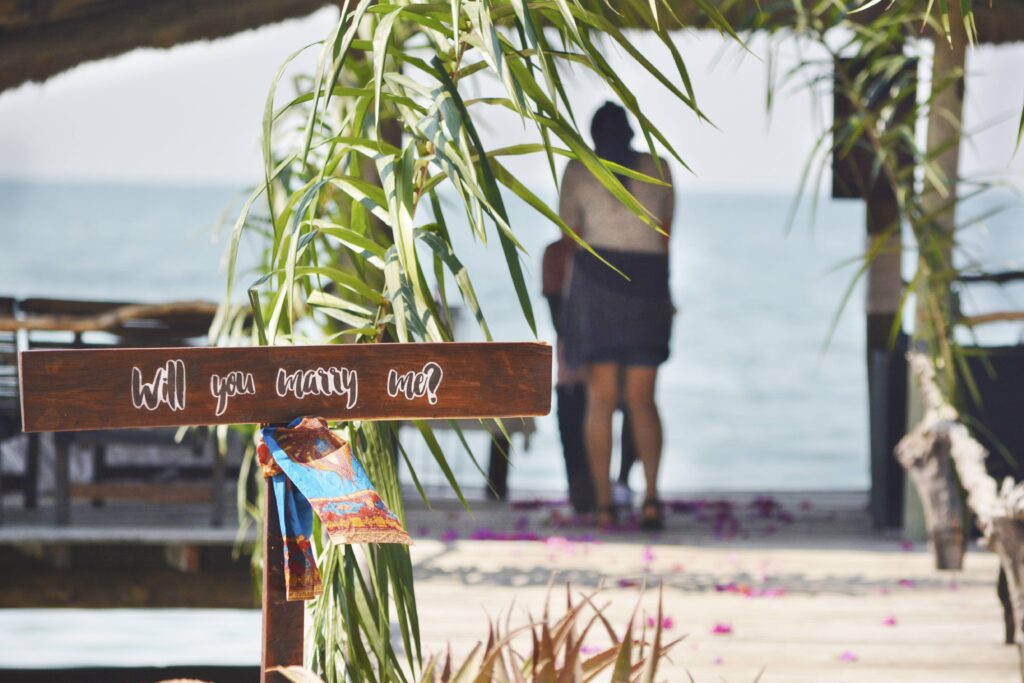
Lake Tanganyika, 2018. The moment I stopped keeping my options open.

There is a photo I keep coming back to.

A beach on the shores of Lake Tanganyika. A man on one knee. A woman standing in front of him. In his hands, a ring. Behind her, a placard in the sand: “Will you marry me?”

That photo is me. Seven years ago.

And for years before that moment, the idea terrified me.

Not the proposal. The commitment.

Committing meant I was done asking “what if there’s something better?” Done keeping options open. Done waiting for perfect conditions.

It meant settling.

And I thought settling was what you did when you gave up.

Standing there waiting for her answer, I started to realize:

I had been settling the entire time. I just did not know it.


The Thing I Got Wrong

We use “settling” like it is surrender.

He settled for that job.
She settled for him.

As if settling means accepting less than you deserve. As if the alternative — keeping your options open — is somehow wiser.

But here is what I learned:

Keeping your options open is also settling.

You are just settling for something different.

You are settling for waiting. For indecision. For the fantasy that perfect conditions are coming.

And while you wait, your most productive years slip by.


DStv Channel 100

Years ago, I wrote about a channel on DSTV called Channel 100.

It shows a bit of everything. Sports highlights. Action clips. Movie trailers. Comedy segments.

Feels exciting at first. Like sampling the best of every channel without committing.

But stay there too long: you get highlights, no depth. No storylines. No full games.

The feeling of experiencing everything. The reality of experiencing nothing fully.

I lived most of my twenties like Channel 100.

Keeping options open. Dating but not committing. Starting things, not finishing. Staying “flexible.”

I told myself I was staying open to opportunity.

But I was settling for “Channel 100”.


What “Not Settling” Actually Looks Like

I see this pattern everywhere now.

In relationships:

People who stay with someone but keep one foot out emotionally. Not because the person is wrong. But because they believe there is someone better out there. Someone who has everything.

So this person right now? Just temporary. Passing time until the real deal shows up.

They are not refusing to settle. They are settling — for never going deep. For years of surface-level connection while waiting for perfect to arrive.

In careers:

“I am just doing this job until the real opportunity comes.”

So they show up. But do not invest. Keep the resume updated. Stay ready to leave.

They think they are keeping options open. But they are settling — for being a beginner forever. For missing what shows up when you actually invest where you are.

In business:

Testing idea after idea. Getting each one to the point where it could scale. Then pivoting to the next thing because what if that one is better?

Not refusing to settle. Settling — for building nothing. For years of “just testing” that never turn into anything real.


The Pattern

Here is what all of these have in common:

They are all waiting for the “real deal” to show up.

The perfect partner. The perfect job. The perfect business idea. The perfect moment.

But the “real deal” is not something you find.

It is something you build.

You do not stumble into the perfect relationship. You commit to someone and build it over years.

You do not land the perfect job. You commit to something, excel at it, and that excellence opens doors you could not see before.

You do not discover the perfect business idea. You commit to one, work through the hard parts, and turn it into something that works.

But if you treat everything as temporary — if you wait for the finished version to show up — you stay in permanent holding pattern.

And that is settling. For never starting.


What I Almost Lost

There was a period where I thought I needed to build more before I could commit.

Finish the MBA. Then the MSc in Engineering. Build the house. Reach a financial level.

Then I would be ready to settle down.

But every time I got close, the goalpost moved.

I was already settled. For waiting. For “someday.” For the idea that perfect conditions were coming.

But that moment does not exist.

I was never going to feel fully ready to commit. To marry. To have children.

There was always more I could build first. Another milestone. Another reason to wait.

And if I had kept waiting, I would still be waiting now.


The Shift

What changed was this:

The cost of waiting was higher than the cost of choosing.

By keeping options open, I was not preserving freedom. I was delaying life.

Living on Channel 100. Highlights. Never committing long enough to see where it goes.

So I stopped waiting.

Did not wait for everything figured out. Perfect conditions. Everything built.

Just chose. Committed.

And what surprised me:

The things I thought I needed before settling — financial goals, construction project, career milestones — happened faster after I committed.

Not because marriage made me productive. Because I was no longer carrying indecision.

No longer splitting focus. No longer treating where I was as temporary.

I just built.


What Settling Actually Means

Settling is not lowering standards.

Not giving up. Not accepting less.

Settling is choosing.

Choosing one thing and going all in. Accepting that you cannot experience every version of life. Letting go of the fantasy that you can have it all.

And building something real with the time you have.

The most meaningful progress I have made — in my marriage, my career, my projects — came after I stopped keeping options open.

It came when I chose. When I committed. When I said “Will you marry me?” to one path and stopped looking back.


Think about that image again.

Lake Tanganyika. Bended knee. “Will you marry me?”

That moment was not just about a relationship.

It was when I stopped sitting on the fence and started building.

After years of keeping options open. Waiting for perfect conditions. Treating everything as temporary.

I reached a point where I had to settle.

Pick one path. One person. One life to build.

Not because it was perfect. Not because I was certain.

Because sitting on the fence — refusing to settle — was itself settling. For incompleteness. For waiting. For never starting.

The proposal was not giving up.

It was going all in.


So here is the question:

What are you refusing to commit to because you are afraid of what you will miss out on?

What are you keeping on Channel 100 instead of switching to the full experience?

I wonder if — like me seven years ago — you are already settled.

You have just settled for waiting instead of building.

Maybe it is time to get on one knee.

Not literally. But in whatever area of your life you have been keeping one foot out the door.

And ask yourself: Will you marry this?

IN THE GAME

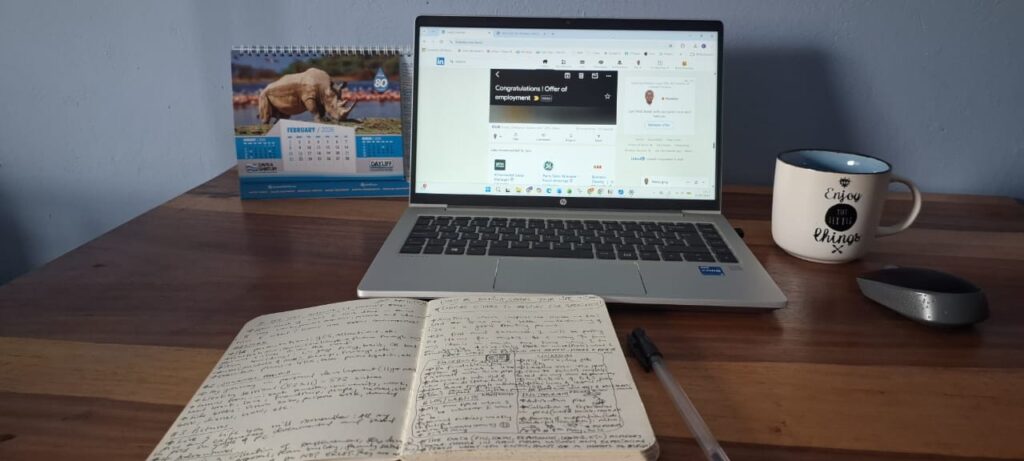
I logged back into LinkedIn a few weeks ago.

First time in three years.

Within five minutes, I felt it.

That old, familiar weight. The sense of being behind.

Promotions. Credentials. New titles. Travel. Everyone moving up, moving forward, moving somewhere that looked impressive.

And me? I came back with an article about invisible progress. A reflection maybe fifty people would read.

Nothing to announce. Nothing that looked like progress from the outside.

For a moment — longer than I want to admit — I questioned everything.

What have I been doing while everyone else was building credentials?

Then I remembered what I had written just two months ago. About choosing to sit still as 2025 turned into 2026. About noticing what was actually there instead of constantly moving toward what should be next.

I had fallen right back into the trap.

Measuring myself against other people’s highlight reels. Wondering if I should go back to collecting credentials. The next degree. The next certification. The thing that looks impressive on a profile but changes nothing about how you actually live.

I used to pursue those things early in my career. They opened doors. But somewhere along the way, it started to feel forced. Like playing by rules I did not write. Like a treadmill where one qualification leads to the next and satisfaction never arrives.

So I stopped.

Not because I became lazy. But because I chose to pay attention to different things.

And sitting there on LinkedIn, I had to remind myself: that choice was deliberate.

I am not behind.

I am just playing a different game.

The Game and The Gap

There are two ways of looking at your life at any given moment.

You are either in the game or in the gap.

When you are in the game, you are present to what you have. Grateful for it. Working with it. Building from it.

When you are in the gap, you are focused on what is missing. What you should have by now. What others have that you do not. Where you are behind.

Most of us spend far more time in the gap than we realize.

And here is what makes it dangerous:

If you focus on what you have, you get what you do not have. If you focus on what you do not have, you lose what you have.

Read that again.

Because it sounds simple until you sit with it.

When you are grateful for what is working, you build from strength. You notice opportunities. You invest energy in what matters. And somehow — not magically, but practically — more good things arrive.

When you are obsessed with what is missing, you erode what is present. You take for granted the things that are working. You stop investing in them. And slowly, quietly, they start to disappear.

The job you complained about daily until it was gone.

The relationship you took for granted until it ended.

The friendships you stopped investing in until you realized one day you had no one to call.

What I Almost Missed

It is March now. Two months into the year.

And if I am honest, I have been better lately at noticing what is actually here instead of only seeing what is missing.

Not perfectly. But better than I was three years ago when I was moving through life on autopilot.

One of the ways I am learning to stay out of the gap is simple: count your blessings. Periodically. Deliberately.

Sit down. Look back over a stretch of time. And ask: What are three things I am grateful for that I might have missed if I had not stopped to ask?

So I did that this week. Two months into the year. Three things.

Here is what appeared.

1. I Started Paying Attention Again

In November, I started writing again after three years of silence.

Not publicly at first. Just privately. In a journal. Paying attention to what I was noticing.

In January, I moved the blog to a better platform and started sharing some of it publicly.

And in February, I kept going. Every week.

This is not easy for me.

I am someone who prefers keeping to myself. Even when I want to share something, there is always a voice that says: Who needs to hear this? Just keep it private.

But I have been pushing past that voice. Because it is growth for me. Overcoming a fear. Doing something that genuinely scares me. And I am hoping it is the start of doing more things that scare me.

But here is what I almost missed: the sharing is not really about the blog itself.

It is about what it forces me to do.

When you know you are going to share something, you pay attention differently. The conversation with a colleague is no longer just small talk — it is material. The observation on the drive home is no longer just a passing thought — it is worth capturing. The pattern you notice at work is no longer just background noise — it is data.

Writing publicly has made me more present to my own life.

Four months ago, I was moving through days without really seeing them.

Now I am paying attention.

That is not nothing.

2. My Wife Got Her Job Back

Six months.

That is how long she was out of work after her contract ended unexpectedly last year.

Six months of uncertainty. Of budgets tightening. Of wondering when the next opportunity would come.

In January, her contract was renewed.

And I almost did not pause to be grateful for it.

Not because I did not care. But because the moment it happened, I moved immediately to the next thing. Pushing for her gratuity from previous contracts. The next concern. The next gap.

But sitting here now, two months later, I can see it clearly.

For six months we managed. And then the situation changed. Just because sometimes things work out.

That deserves more than a passing acknowledgment.

3. A Conversation This Past Week

I had a conversation with a colleague this past week.

We noticed each other’s grey hair.

There was a moment of awkwardness first. The kind that happens when you see something in someone else that you have been quietly self-conscious about in yourself.

But then we laughed. And started talking.

About aging. About one-packs instead of flat stomachs. About how the body does not recover the way it used to.

And then he said something that made us both laugh harder: “Remember when we used to look for where to link up over the weekend? Whether it was Chicago’s, Granddaddy’s, ku Northmead? Now we are looking at Movit and other black hair dye products.”

It was funny. But it was also true.

A few years ago, our conversations were about where to hang out, which spot had the vibe, what plans to make for the weekend.

Now they are about taking care of ourselves. About what still works and what does not work like it used to. About not chasing blindly after the next thing.

And at some point in that conversation, we both realized the same thing.

The papers we chased — the degrees, the MBAs, the certifications — they opened doors. No question.

But here is what we noticed: most of the people in our circles who are genuinely doing well financially are not the ones with the most impressive qualifications or the biggest job titles. They are the ones who figured out what they actually wanted and went after that instead of just following the expected path.

The credentials matter. But they are not the destination. They are tools. And if you spend your whole life collecting tools without ever building anything with them, you arrive at sixty with a full toolbox and nothing to show for it.

Or worse — you climb all the way to the top of the ladder only to realize it was leaning against the wrong wall.

That conversation reminded me why I stopped chasing credentials for their own sake. Not because they are worthless. But because I would rather build something that matters than collect more tools I might never use.

The LinkedIn Trap

Here is the thing about LinkedIn.

It is not the enemy. It serves a purpose. Networking. Opportunities. Genuine connection.

But it is also a highlight reel disguised as reality.

People do not post about the weeks where nothing happened. They do not share the conversations that mattered but left no record. They do not announce the quiet, unglamorous work of showing up when nobody is watching.

They post the promotion. The award. The new role. The trip. The milestone.

And if you are not careful, you start measuring your life against a curated version of everyone else’s.

You see someone’s highlight and compare it to your entire week. Their best moment against your average Tuesday.

And suddenly you are behind. Lacking. Not doing enough.

Even though you have no idea what their actual week looked like. What they are struggling with privately. What they are afraid of. What they wish they had that you do.

The gap is seductive because it feels productive.

It feels like ambition. Like drive. Like refusing to settle.

But most of the time, it is just a way of never being satisfied with what is actually working.

What Being In The Game Looks Like

Being in the game does not mean you stop wanting more.

It does not mean you abandon goals or stop pushing yourself or settle for less than you are capable of.

It just means you work from gratitude instead of lack.

You celebrate the fact that you started paying attention again before you worry about how many people are reading.

You acknowledge the job that came back before you stress about the next concern.

You appreciate the conversation that reminded you why you made the choices you made.

Because here is what I am learning:

The people who build the most impressive lives are not the ones obsessed with what they do not have yet. They are the ones who are deeply grateful for what is already working.

They notice the small wins. They celebrate progress that does not show up on a resume. They invest in relationships that will never trend on social media.

And somehow — not magically, but practically — more good things arrive.

Not because they deserved them. But because they were present enough to notice when opportunities showed up. And grateful enough to do something with them.

Two Months In

It is March now.

Two months into the year. Ten more ahead.

And if I spend the next ten months focused on what is missing, I will arrive at December having missed everything that was actually here.

But if I spend them in the game — noticing what is working, being grateful for it, building from it — I suspect the year will look very different.

Not because everything will go perfectly. But because I will have been present for the parts that mattered.

So this is the question I am sitting with. And leaving here for you.

What are you grateful for right now that you almost missed because you were too busy looking at what is not here yet?

Not the big things. Not the milestones. Not the achievements worth posting.

The conversation that mattered. The small win nobody saw. The thing that worked when you were not sure it would.

Because those are the things that build a life worth living.

And they only show up when you are paying attention.